
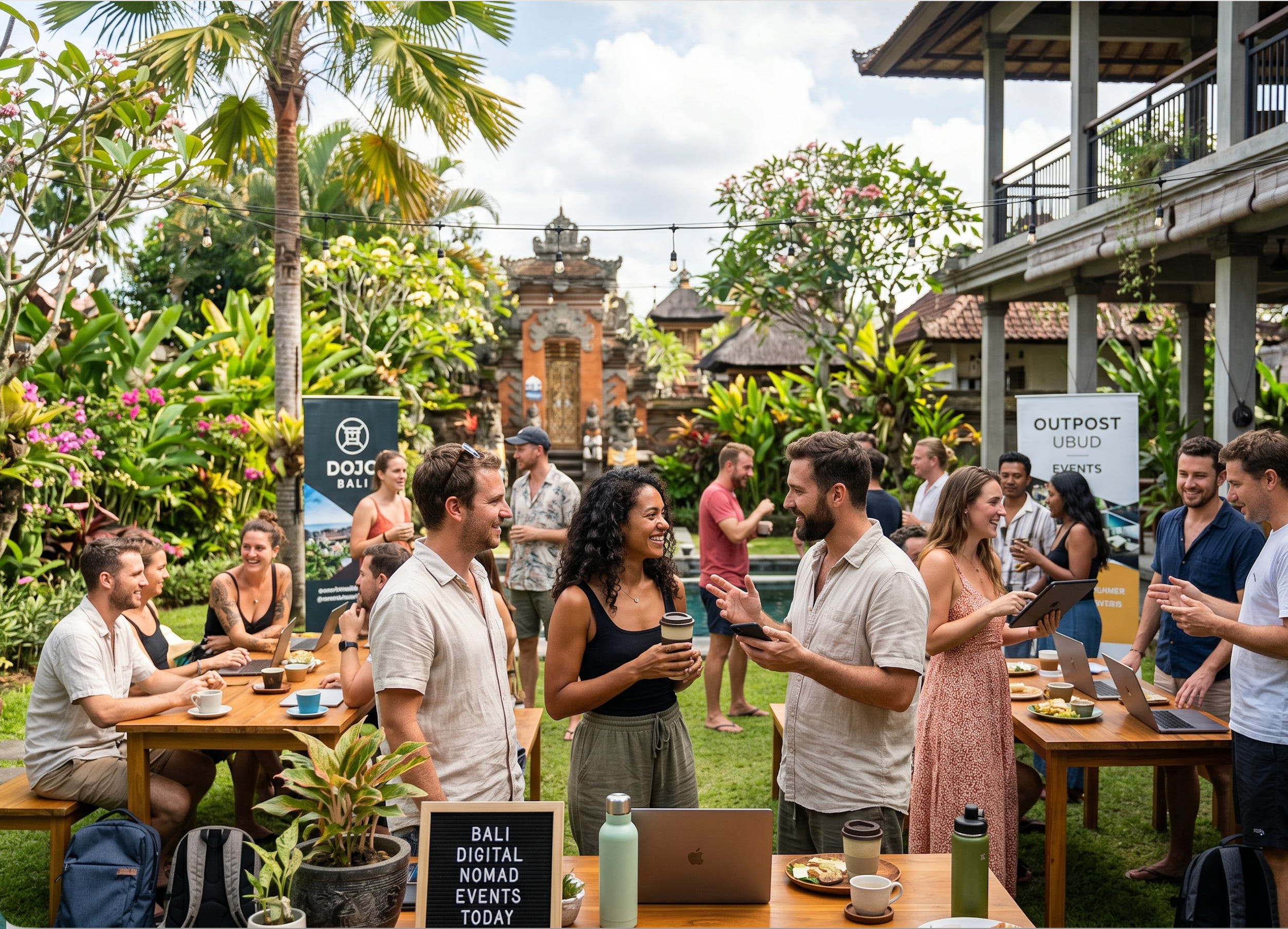
Most digital nomads arrive in Bali having perfected their work setup. The laptop is ready. The VPN is configured. The coffee order is down to a science. What most people haven’t prepared for is the quiet feeling of working in a beautiful place, entirely alone.
Remote work can be remarkably isolating. You can spend weeks in Canggu or Ubud without ever having a real conversation with another person who understands what you do, why you moved, or what it actually means to build a business from a laptop. The scenery is extraordinary. But scenery doesn’t give you your next client, your best collaboration, or the reality check that only another nomad can provide.
Here’s the good news: Bali has one of the most active and welcoming digital nomad communities in the world. The island isn’t just a place to work from — it’s a place where real professional connections are made, maintained, and built into lasting relationships. The digital nomad events here are frequent, the people are open, and the coworking spaces have built entire community ecosystems to help you find your people. This guide covers where the events are, which neighbourhoods deliver the best energy, and how to stay long enough to turn connections into something that actually matters.
Why Networking in Bali Is Different
Bali has been a magnet for remote workers since well before the pandemic normalised working from anywhere. What’s emerged over the past decade is not just a collection of coworking spaces — it’s a fully formed ecosystem of events, communities, and ongoing conversations that exist specifically to connect people.
The opportunity most nomads miss
Many nomads arrive in Bali intending to network, then spend their first week in a café, earphones in, heads down. Bali gently punishes this approach. The community here rewards showing up. The person at the next desk at Dojo, the stranger next to you at a Wednesday lunch at Outpost, the founder you meet at a pitch night — these are not random encounters. They are the kinds of connections that digital nomad communities in other cities take months to develop, compressed into days.
The Coworking Spaces Hosting the Best Events
You don’t need to research every networking Bali event from scratch. The best coworking spaces on the island do that work for you. They run regular events as part of their community offering, and many are free or included with a day pass or membership.
Dojo Bali (Canggu)
Dojo Bali in Canggu is one of the original coworking spaces on the island and remains one of the most community-focused. Located near Echo Beach, it runs an almost daily programme of events — from inspirational talks and mastermind sessions to informal chess nights and social barbecues. The skill-sharing sessions are particularly valuable: they bring together designers, developers, marketers, and founders in a format that encourages real conversation rather than business card exchanges. Dojo is open 24/7 and is generally considered the heartbeat of the Canggu coworking Bali community.
Outpost (Canggu and Ubud)
Outpost operates as both a coworking space and a coliving hub, with locations in both Canggu and Ubud. Their approach to community is built around regular shared meals. They host Wednesday and Friday lunches that are deliberately designed to get members talking to people they haven’t met before. The mix of guests at any given lunch spans tech founders, freelance designers, coaches, and writers. It’s one of the more reliable ways to practise Outpost Ubud networking across industries in a relaxed, low-pressure setting. Their Ubud location attracts the wellness and creative communities alongside the more traditional business crowd.
Tropical Nomad (Canggu)
Tropical Nomad in Canggu is smaller and quieter than Dojo, but runs a solid programme of workshops and social evenings. If you prefer a community that’s slightly less high-octane, it’s a strong option. Their Tropical Nomad Bali events tend to attract a mix of early-stage founders and established freelancers, and the atmosphere is deliberately collaborative rather than competitive.
The Best Neighbourhoods for Connecting With Fellow Nomads
Where you base yourself in Bali shapes who you meet. The island’s remote work community Bali isn’t spread evenly — it clusters around a few key areas.
Canggu – high energy, always on
Canggu is the hub. It has the highest concentration of digital nomads, the most coworking spaces, and the busiest social calendar. Events happen most evenings — from startup pitch nights to beach barbecues — and the café culture makes it easy to start conversations during the day. The Canggu digital nomad community suits nomads who want frequent, spontaneous connections and don’t mind noise, crowds, and the general buzz of a place that never quite switches off.
Ubud – slower connections, deeper roots
Ubud operates at a different pace. The networking here happens through mastermind groups, yoga studios, wellness retreats, and creative workshops rather than pitch nights and beach clubs. Ubud digital nomad events tend to form more slowly but often go deeper. If your work sits in the creative industries, wellness, spirituality, or coaching, Ubud’s community is likely to feel more relevant and energising.
Online Communities: Where It Starts Before You Arrive
One of the best investments you can make before landing in Bali is joining its online communities. The nomad community here is highly active online, and connections made digitally translate naturally into real-world meetings.
Facebook groups and Meetup
The most active Facebook groups include “Bali Digital Nomads,” “Canggu Community,” and “Bali Expat Community.” These are where events get posted, coworking spaces promote workshops, and locals recommend services. Joining a week or two before you arrive means that by the time you land, you’ll already have a sense of what’s happening and who to look out for. Meetup.com also lists regular business, tech, and social events across the island and is worth bookmarking for Bali business networking.
WhatsApp and Telegram channels
Much of the day-to-day conversation in Bali’s nomad community happens on WhatsApp and Telegram. These aren’t always easy to find from outside the island — joining Facebook groups first and then following the links shared in those groups is the most reliable route in. Once you’re connected, you’ll see event invitations, last-minute meetups, and recommendations that never make it to public calendars.
Visa Basics: Staying Long Enough to Build Real Connections
A week in Bali is enough to see the sights. Building genuine professional connections takes considerably longer. Before you plan your visit around the networking calendar, make sure your visa allows you to stay.
Short stays: Visa on Arrival and B211A
The Visa on Arrival (Visa Kunjungan Saat Kedatangan) costs IDR 500,000 (approximately USD 30) and allows a 30-day stay, extendable once to 60 days. It is intended for tourism and leisure. The B211A Visit Visa allows an initial 60-day stay extendable up to 180 days and is better suited to longer-term nomadic visits. Costs including agent fees typically run between USD 200 and USD 300 for the initial application. Neither visa permits earning income from Indonesian sources or working for Indonesian companies.
Longer stays: The E33G Remote Worker Visa
Introduced in 2024, the E33G Remote Worker Visa is designed specifically for remote workers employed by non-Indonesian companies. It allows a stay of up to 12 months, with renewal available. To qualify, you must earn at least USD 60,000 per year from a foreign employer, hold a valid employment contract, and demonstrate minimum savings of USD 2,000 held for three consecutive months. Official visa fees are approximately IDR 7,000,000 (around USD 430), with total costs rising to USD 600–1,000 if using a visa agent. Applications must be submitted from outside Indonesia. The digital nomad visa Bali route offers the most stability for those serious about building long-term roots in the community.
Tips for Making the Most of It All
Show up regularly to the same spaces rather than sampling a different venue each day. Consistency is what converts an introduction into a relationship. Bring something to offer — a skill, a referral, a warm introduction — rather than arriving with a list of things you need. Bali’s nomad community is generous, but reciprocity matters. And attend the informal events as readily as the professional ones. Some of the most useful connections happen at a beach barbecue, not a structured networking night.
Bali’s digital nomad community is one of the most active and welcoming in the world. The events are frequent, the spaces are excellent, and the people are genuinely open. You don’t need to be an extrovert to thrive here — you just need to show up consistently.
Whether you’re arriving for six weeks or setting up for six months, the connections you make in Bali have a way of following you — into collaborations, friendships, and opportunities you didn’t know you were looking for. Sort your visa, pick your neighbourhood, join the online communities before you land, and get into the rooms where interesting things are happening.
FAQs
Q: Do I need to pay to attend networking events in Bali?
A: Many events hosted by coworking spaces like Dojo Bali and Outpost are free with a day pass or membership. Some workshops and mastermind sessions carry a small additional fee, typically IDR 50,000–200,000. Beach barbecues and informal meetups organised through Facebook groups are usually free to attend.
Q: Is Canggu or Ubud better for digital nomad networking?
A: It depends on your industry and working style. Canggu suits tech, marketing, and entrepreneurship with a faster social pace and daily events. Ubud attracts creative, wellness, and spiritual communities and tends to offer slower, more intentional connections. Many nomads split their time between the two.
Q: How do I find digital nomad events in Bali before I arrive?
A: Join Facebook groups such as “Bali Digital Nomads” and “Canggu Community” before your trip. Follow Dojo Bali and Outpost on social media and check their events pages directly. Once in Bali, WhatsApp and Telegram channels linked to these groups fill in the rest.
Q: Can I legally work remotely in Bali on a tourist visa?
A: The Visa on Arrival and B211A are tourism and visit visas — they don’t permit working for Indonesian companies or earning income from Indonesian sources. For full legal clarity, the E33G Remote Worker Visa is the appropriate route. It was introduced specifically for employed remote workers earning from abroad.
Q: What is the E33G visa and who qualifies?
A: The E33G is Indonesia’s Remote Worker Visa, introduced in 2024. It allows remote workers employed by non-Indonesian companies to live in Bali for up to 12 months. You must earn at least USD 60,000 per year, provide an employment contract, and show USD 2,000 in savings held for three consecutive months. Official fees are approximately USD 430, rising to USD 600–1,000 with a visa agent.
Q: Are networking events in Bali industry-specific or general?
A: Both exist. General social events — barbecues, shared lunches, casual meetups — welcome everyone. Industry-specific events such as hackathons for developers, pitch nights for founders, and creative workshops happen regularly too. Facebook groups and coworking space event pages are the best places to find events relevant to your particular field.
Q: Is Bali a good destination for freelancers as well as employees?
A: Absolutely. The community includes freelancers, agency owners, employed remote workers, and founders at every stage. Skill-sharing events and mastermind sessions are especially popular among freelancers looking to exchange expertise, source referrals, and find collaborative work.
Q: What are the most active online communities for digital nomads in Bali?
A: The most consistently active are the “Bali Digital Nomads” Facebook group, “Canggu Community,” and “Bali Expat Community.” WhatsApp and Telegram channels connected to these groups carry more real-time conversations and last-minute event notices. Meetup.com lists more formal business and tech-focused events.
Q: How long should I plan to stay in Bali to benefit from the networking community?
A: A minimum of four to six weeks gives you enough time to develop relationships beyond the introductory stage. Many nomads find the second month is when their community really starts to come together. If you can arrange a B211A or E33G visa, staying two to three months is where the real value tends to compound.
Q: Is Bali safe for solo digital nomads?
A: Yes, Bali is generally considered very safe for solo travellers, including solo women. The expat and nomad community is well-established and welcoming, and coworking spaces provide immediate social infrastructure on arrival. Standard safety practices apply — keep valuables secure, use licensed transport providers, and take care when travelling alone late at night in unfamiliar areas.
Disclaimers
Visa & Immigration: This article describes my own experience and research on Indonesian visas, including the E33G Remote Worker Visa. Indonesian immigration rules change frequently and depend on your nationality and circumstances. Always confirm current requirements directly with a qualified Indonesian immigration agent or the Directorate General of Immigration before applying. This is not professional advice.
— A note from Annie
Destined for Bali shares my personal experiences, opinions, and independent research. Everything I write reflects what I’ve found to be true at the time of publishing — but Bali changes constantly, and what works for me may not work for you. Always do your own research and seek qualified professional advice before making decisions about travel, visas, property, business, health, or anything else that matters. Some links in my posts are affiliate links, meaning I may earn a small commission at no extra cost to you. Sponsored content is always clearly labelled. Read the full Terms and Privacy Policy.