
Hidden Temples That’ll Take Your Breath Away
Part 2 of 6: Sacred Spaces Beyond the Crowds

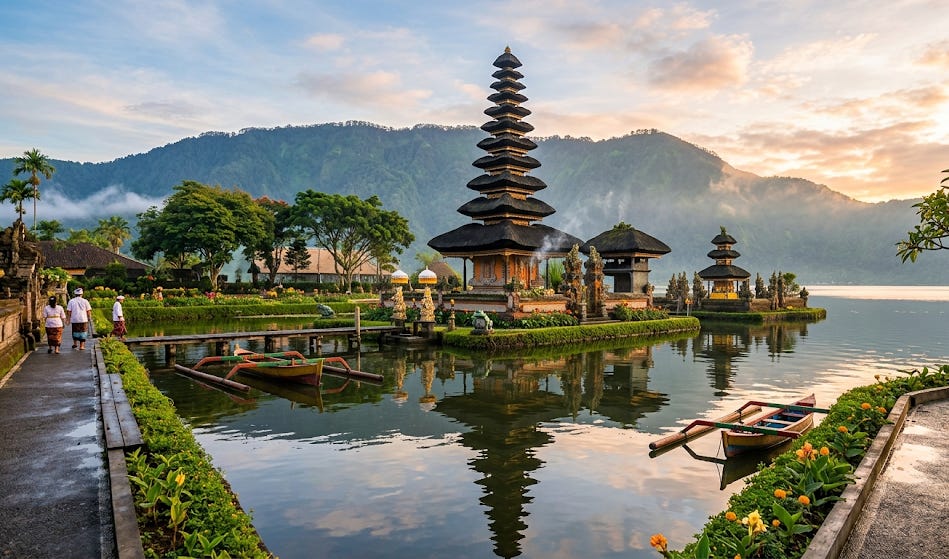
QUICK SUMMARY
Bali has thousands of temples, most tourists only see a handful
Kehen Temple in Bangli rivals famous temples without the crowds
Pura Batu Bolong offers stunning coastal views and a spiritual atmosphere
Respectful visiting means proper dress and understanding temple etiquette
These sacred spaces offer genuine spiritual experiences, not just photo ops
Let’s talk about temples
If you’ve done any Bali research, you’ve probably seen photos of Tanah Lot at sunset. Or the gates of Lempuyang Temple (you know the one, everyone’s Instagram has it). Maybe Uluwatu with its cliffside views.
These temples are famous for good reason. They’re stunning. Genuinely beautiful. Absolutely worth seeing if you want to.
But here’s what nobody tells you: Bali has over 20,000 temples. Twenty thousand. And most tourists see maybe three or four of them.
The rest? Peaceful, beautiful, and often more spiritually significant than their famous counterparts. They’re just waiting for visitors who are willing to venture slightly off the main road.
Why Temple-Hopping Matters
Before we dive into specific spots, let me tell you why this matters.
Temples in Bali aren’t museums. They’re not historical sites that exist for tourists to photograph. They’re living, active places of worship where real communities gather for real ceremonies.
When you visit a famous temple during peak hours, you’re part of a crowd. You’re being herded through designated areas. You’re competing for photos. You’re one of hundreds of people passing through that day.
When you visit a quieter temple, everything changes. You can actually sit. You can observe. You can see how locals interact with these sacred spaces. Sometimes you might even witness a ceremony, which is an absolute privilege if you approach it respectfully.
The energy is completely different. The experience is completely different. And honestly, the temples themselves are often just as beautiful.
Kehen Temple: Bali’s Best-Kept Secret
Let’s start with my favourite hidden temple: Kehen Temple in Bangli.
This place is extraordinary, and I genuinely don’t understand why it’s not more famous. It dates back to the 11th century, making it one of Bali’s oldest temples. It’s massive, with multiple levels carved into a hillside. And on most days, you might be one of only a handful of visitors.
What Makes It Special
The moment you arrive, you’ll see what I mean. The entrance is this grand stone staircase lined with statues. Not the neat, tourist-friendly kind of entrance. The real deal, worn smooth by centuries of worshippers climbing up and down.
At the top, you’ll find an enormous banyan tree. We’re talking ancient, with roots that have grown into the temple structure itself. It’s the kind of tree that makes you understand why people consider certain places sacred.
The temple has an 11-tiered pagoda dedicated to the Hindu trinity (Brahma, Vishnu, and Shiva). The carvings throughout are intricate, detailed, and beautifully preserved. Every corner reveals something new. A small shrine. An offering. A view that makes you stop and stare.
But what really sets Kehen apart is the atmosphere. It’s quiet. Peaceful. You can hear birds. You can smell incense from recent offerings. You can actually be present rather than being jostled by tour groups.
How to Visit Respectfully
Kehen Temple is still an active place of worship, which means there are rules. Important ones.
Dress properly. You’ll need to wear a sarong and a sash. Some temples provide these, but Kehen might not always have them available. Bring your own to be safe. You can buy a simple set at any market for a few pounds.
Women on their period cannot enter. This is a traditional Hindu rule that applies to all Balinese temples. It’s about ritual purity, not discrimination. Please respect this even if you don’t personally agree with it.
Don’t climb on structures. Those crumbling walls and stairs that look perfect for photos? They’re sacred. And also quite old and fragile. Look, don’t touch.
Keep your voice down. This isn’t a playground. If there’s a ceremony happening, watch from a respectful distance and definitely don’t interrupt.
Make a small donation. There’s usually a donation box. Contribute something, even if it’s small. The money helps maintain these incredible structures.
Practical Details
Kehen Temple is in Bangli, about an hour’s drive from Ubud or Canggu. You’ll need to arrange transport, either a driver for the day or a scooter if you’re confident riding.
Go early in the morning, around 8-9am. The light is beautiful, it’s cooler, and you’ll have the place mostly to yourself. Avoid weekends if possible, as that’s when local families are more likely to visit for ceremonies.
Expect to spend about an hour here, maybe more if you’re really soaking it in. Bring water, but be discreet about drinking it. And for goodness’ sake, take your rubbish with you.
Pura Batu Bolong: Where Ocean Meets Spirit
Now let’s head to the coast for something completely different.
Pura Batu Bolong sits near Canggu, perched on rocks where waves crash dramatically below. The name literally means “temple of the holey rock,” referring to the natural hole in the rock formation.
This temple is dedicated to the sea gods, which makes perfect sense when you see its location. It’s all about Bali’s deep spiritual connection with the ocean.
What to Expect
Unlike Kehen’s peaceful jungle setting, Pura Batu Bolong is dramatic. The ocean is loud. The wind whips around. Salt spray mists everything. It’s raw and powerful in a way that indoor temples just aren’t.
The temple itself is smaller than Kehen, but its location makes it unforgettable. During high tide, waves crash against the rocks, sending spray into the air. During low tide, you can walk around the base (carefully) and see the rock formations up close.
If you time your visit right, you might see locals making offerings to the sea. They’ll bring flowers, rice, and incense to ask for protection for fishermen or safe passage for travellers. Watching these rituals, from a respectful distance, is incredibly moving.
Best Time to Visit
Sunset is magical here, but it’s also when you’ll encounter the most people. Not crowds like at Tanah Lot, but definitely more than if you go earlier.
My recommendation? Late afternoon, maybe an hour or two before sunset. You get beautiful light, dramatic waves, and fewer people. Plus you can watch the light change as the sun gets lower.
The other advantage of going slightly earlier is that you can spend time actually being there, rather than just snapping photos and leaving. Sit. Watch the ocean. Observe how locals interact with the space. Let the energy of the place sink in.
Getting There
Pura Batu Bolong is much easier to reach than Kehen. It’s right near Canggu, accessible by scooter or even a short taxi ride. You can easily combine it with a day of exploring the Canggu area.
Parking is straightforward, and there are usually a few local vendors nearby selling drinks and snacks. The entrance is free, though donations are welcome.
Wear shoes with good grip. The rocks can be slippery, especially if there’s spray from the waves. And watch your footing, seriously. It’s beautiful but it’s also actual cliffs with actual ocean below.
The Difference Between Tourist Temples and Local Temples
Let me be clear about something. I’m not saying the famous temples are bad or not worth visiting. Tanah Lot at sunset is genuinely stunning. The gates at Lempuyang are iconic for a reason. But there’s a trade-off.
At famous temples, you’re part of a machine. There are ticket booths. Official photographers. Souvenir stands. Crowds are managed like theme park queues. You get your photo, you move along, next person’s turn.
The experience is more about capturing proof you were there than actually being there.
At quieter temples, you’re a visitor, not a customer. There’s space to breathe. Room to observe. Time to actually think about what these places mean to the people who built them and still worship there.
You see locals bringing offerings. Grandparents teaching grandchildren how to pray. Ceremonies that have nothing to do with tourists. The real spiritual life of Bali happening whether you’re there or not.
That’s the magic. Not that these places exist for you, but that they don’t. You’re fortunate enough to be allowed to witness something that would happen anyway.
Other Hidden Temples Worth Exploring
Kehen and Pura Batu Bolong are my top picks, but Bali has so many more quiet temples waiting to be discovered.
Tirta Empul is actually quite famous, but if you go at the right time (early morning), you can see locals doing their ritual bathing without the tour bus crowds.
Gunung Kawi near Ubud has these incredible shrines carved into rock faces. It requires walking down (and back up) hundreds of steps, which deters some visitors. Your reward is ancient temples in a lush river valley.
Lempuyang Temple (yes, the famous one) is actually a complex of several temples. Most tourists photograph the gates and leave. If you hike to the temples further up the mountain, you’ll find peace and incredible views.
Pura Luhur Batukaru sits on the slopes of Mount Batukaru, surrounded by forest. It’s beautifully atmospheric, especially on misty mornings.
The key with all of these is timing. Go early. Go on weekdays. Be willing to walk a bit or drive further. That extra effort creates the filter that keeps the crowds away.
Temple Etiquette: The Non-Negotiables
Since we’re talking about sacred spaces, let’s be crystal clear about the rules.
Always wear a sarong and sash. No exceptions. Even if you see other tourists breaking this rule, don’t. It’s disrespectful, and locals notice even if they’re too polite to say anything.
Remove your shoes where indicated. Most temples have clear areas where shoes come off.
Don’t stand higher than a priest or shrine during ceremonies. If someone’s praying, don’t position yourself above them for a photo.
Never point your feet at people or sacred objects. Feet are considered the lowest, dirtiest part of the body in Balinese culture.
Use your right hand for giving and receiving. The left hand is considered impure.
Ask before photographing people, especially during ceremonies. Some ceremonies are completely off-limits for photos.
Stay on marked paths. If an area looks restricted, it probably is. Don’t climb on structures or enter areas clearly meant only for priests.
Keep modest clothing under your sarong. Tank tops are fine, but make sure your shoulders are covered. Bikini tops? Absolutely not, even under a sarong.
When in doubt, observe locals and follow their lead. If everyone’s being quiet, you be quiet. If everyone’s removing shoes, you remove shoes. It’s really that simple.
Why Bother With the Less Famous Ones?
I know what you’re thinking. If the famous temples are famous, shouldn’t you see those first? Don’t you want to see the “best” ones? Here’s the thing. The famous ones aren’t necessarily better. They’re just more accessible and more photographed.
Imagine if everyone who visited London only went to Buckingham Palace and Big Ben. Yes, those are worth seeing. But you’d miss so much of what makes London actually interesting.
Bali’s the same way. The famous temples give you a taste. The quieter ones give you the full meal. Plus, let’s be honest. Which experience would you rather have?
Standing in line for 20 minutes to take the same photo everyone else has, surrounded by people and feeling rushed? Or sitting peacefully in an ancient temple, watching sunlight filter through trees, hearing birds and prayers and nothing else?
I know which one I’d choose.
Making It Meaningful
Visiting temples can be meaningful or it can be just another box to tick. The difference is in how you approach it.
Give yourself time. Don’t rush. Don’t try to see three temples in one morning. Pick one or two and really be there.
Learn something about what you’re seeing. Understanding the significance of a shrine or the meaning behind an offering adds depth to the experience.
Observe more than you photograph. I’m not saying don’t take pictures, but don’t let photography become the entire point. Put your phone down for a bit. Just look.
If there’s a ceremony happening, consider yourself incredibly fortunate. Watch respectfully, don’t intrude, and soak in the privilege of witnessing something sacred.
These moments are what you’ll remember. Not the perfect Instagram shot, but the feeling of being present in a truly special place.
Over to You
Have you visited any of Bali’s quieter temples? Which ones moved you?
If you’re planning a trip, which temples are you most drawn to? The jungle peace of Kehen or the dramatic ocean setting of Pura Batu Bolong?
Any questions about temple etiquette or visiting respectfully?
Drop your thoughts in the comments. And if you’ve got temple recommendations that aren’t in the usual guidebooks, please share them!
Read Part 1: Why Go Off the Beaten Path
Next week: Part 3 - Traditional Villages and Local Life
We’re heading into Bali’s heartland to explore villages where traditional ways of life are still thriving. You’ll learn where to go, what to expect, and how to engage with local communities respectfully.
Subscribe to get Part 3 next week.