
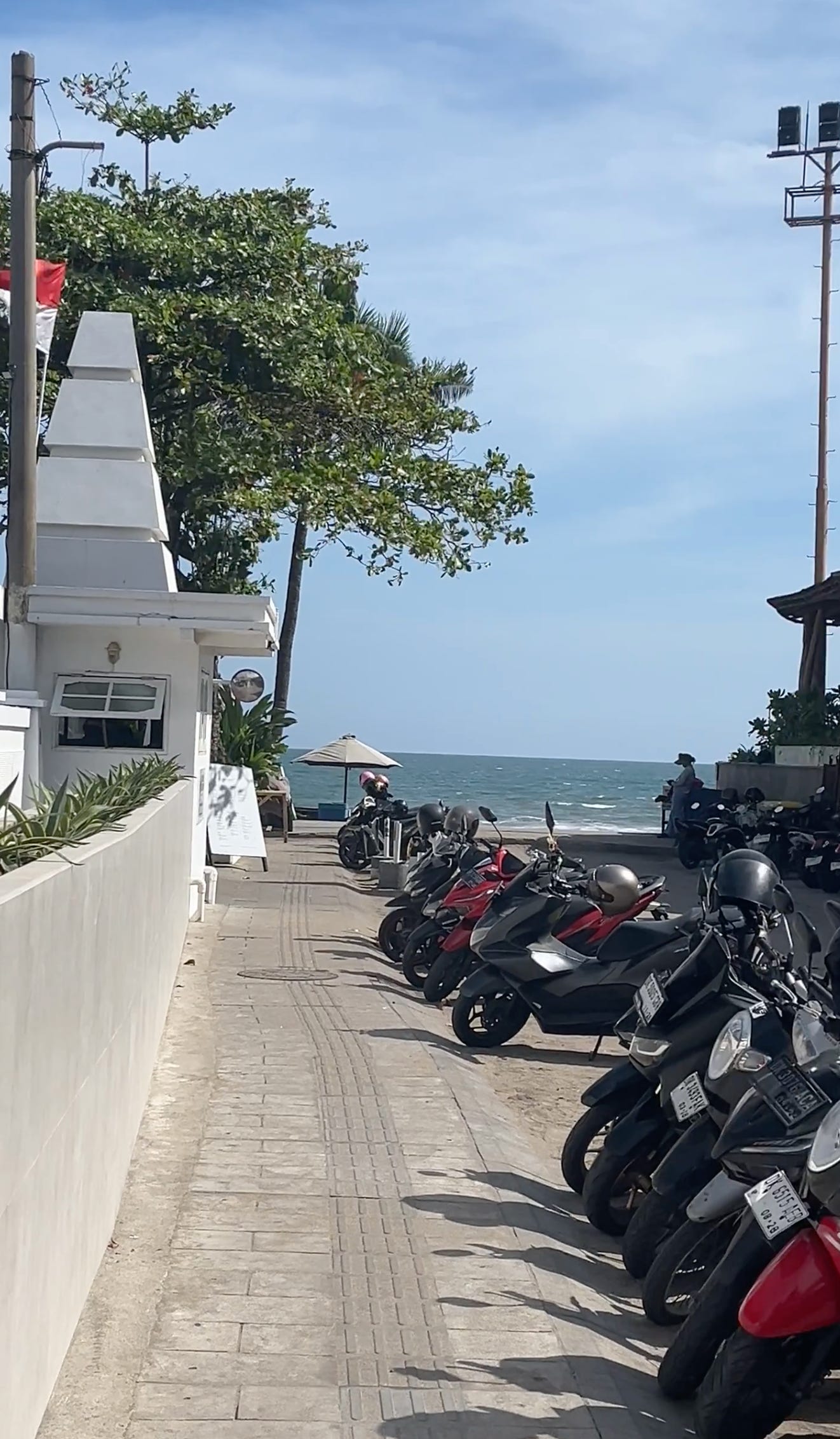
I’ll be honest with you from the start: scooters are how Bali moves. Every local uses one. Most long-term expats ride one. The freedom of pulling out of your villa on a warm morning and navigating the backroads between rice terraces is genuinely one of the island’s great simple pleasures.
Scooter accidents are also one of the leading causes of injury and medical evacuation among tourists in Bali. The roads in Canggu and Kuta are chaotic in ways that catch unprepared riders completely off guard. Riding without the right documentation voids your travel insurance, exposes you to police fines, and leaves you paying every medical bill out of pocket if something goes wrong.
This guide is the honest version of how to do it right: licences, costs, police checkpoints, road rules, and the practical truth about riding in Bali traffic. Read it before you rent anything.
The Reality of Riding in Bali: What the Instagram Posts Don’t Show You
The TikToks make it look effortless. Someone gliding through green rice paddies at golden hour on a Honda Scoopy, hair flowing, zero traffic in sight. That version of riding in Bali exists. But it exists between 6 am and 7:30 am, on backroads in Ubud or the northern highlands, on quiet mornings.
The other version — which is what you’ll encounter most of the time in the south — involves Canggu’s Echo Beach road at 8:30 am with trucks, delivery drivers, tourists who’ve never ridden before, stray dogs, and potholes that appear with no warning. The traffic in the popular areas of Bali is genuinely heavy. Intersections operate on an informal flow system that takes time to understand. Drivers and riders pull out without looking in ways that require constant vigilance.
This isn’t meant to put you off. It’s meant to make sure you ride with appropriate focus rather than the breezy confidence the aesthetic encourages. Bali roads are manageable when you’re alert, experienced enough to handle a scooter, and properly documented. They’re genuinely dangerous when you’re not.
The Licence Question: What You Actually Need to Ride Legally
This matters more in 2026 than it has before. Police checkpoints across tourist areas — Canggu, Seminyak, Kuta, Uluwatu — have increased significantly and are now a consistent feature of daily life rather than occasional enforcement.
To ride legally in Bali, you need:
An International Driving Permit (IDP) endorsed specifically for motorcycles. This must match the class of vehicle you’re renting. If your home licence only covers cars, the IDP won’t cover you for motorcycles.
Your original home country driving licence with motorcycle endorsement.
Your passport (carry a copy; leave the original in your accommodation).
You can obtain an IDP before leaving home through your national motoring association (the AA in the UK, AAA in the US, etc.). It takes about a week to process and costs a modest fee. If you don’t have one, Indonesian authorities can theoretically issue a local equivalent, but this process is cumbersome and rarely pursued by tourists.
The most important thing to understand: If you don’t have an IDP and you ride anyway, your travel insurance is void. If you have an accident — even a minor one that results in hospital treatment — you pay for everything yourself. Given that a scooter accident in Bali can result in burns, fractures, or worse, this is a serious financial risk, not a technicality.
Never ridden a motorbike before? Bali is not the place to learn. The traffic is too unpredictable and the stakes too high. If you don’t have experience, hire a driver or use GoJek/Grab (Bali’s ride-hailing apps) instead.
Hiring a Scooter: Costs, What to Check and Where to Go
Daily rental costs for standard 110cc–125cc scooters (Honda Scoopy, Honda BeAT, Yamaha NMAX) run IDR 60,000–100,000 per day (approximately £3–5). Longer rental periods bring this down further — monthly rates are often IDR 700,000–900,000 (£35–45). Petrol is cheap: a full tank from a roadside petrol vendor (the bottles in bamboo frames you see everywhere) costs IDR 10,000–15,000.
Before you accept any scooter, check:
Brakes: squeeze both and make sure they’re responsive
Tyres: any visible cracks or significant wear?
Lights: front and rear, indicators both sides
Horn: genuinely useful in traffic
Fuel level: note it and agree on whether you return with a full tank
Existing damage: photograph every scratch and dent before you take the bike. Show the photos to the rental owner. Disputes over existing damage are one of the most common complaints.
Most rentals are done informally — no written contract, sometimes just a handshake. In practice, this works fine with reputable local rental shops. Avoid rentals through hotels, which often charge twice the street rate. WhatsApp rental shops in your area for current prices.
The Practical Rules of Bali’s Roads
Indonesia drives on the left. Coming from the US, continental Europe, or anywhere that drives on the right, this needs conscious adjustment, particularly at junctions.
Speed limits: 50 km/h in urban areas, 80 km/h on rural roads. In practice, traffic in Canggu and Seminyak rarely moves faster than 30 km/h. On quieter highland roads, the limit matters more.
Roundabouts: Yield to traffic already in the roundabout, not traffic entering. This is the opposite of some countries. Watch what other drivers do.
Junctions and merging: Bali traffic operates on a negotiated flow rather than strict rules. Confidence and eye contact are your tools. Make your intentions clear with early positioning and steady acceleration.
Stray dogs are a real and specific hazard, particularly at night. They sleep on warm tarmac and move unpredictably. Reduce speed in any area where dogs are visible.
Potholes appear suddenly, are often deep, and are occasionally camouflaged by puddles. Keep your speed manageable on any road you don’t know well.
Never ride at night if you can avoid it. Lighting in rural areas is minimal, road hazards are invisible, and your reaction time to stray animals or poor road surfaces is significantly reduced.
Police Checkpoints, Fines and What to Do If You’re Stopped
Police checkpoints in Canggu, Kuta, and Seminyak are now a regular feature of daily life. They’re looking for missing helmets, no IDP, and expired licences.
No helmet: Instant fine of IDR 250,000 (approximately £12.50). Always wear your helmet. Always.
No International Driving Permit (: You’ll receive a formal written ticket and a fine. Fines should be paid through official banking channels or digital payment systems — not in cash directly to an officer. If an officer requests cash, politely request an official ticket and say you’ll pay through proper channels.
If stopped: Stay calm, be polite, produce your documents. If everything is in order, the interaction should be brief. If you don’t have the right documentation, the process becomes more complicated and expensive. The best approach is simply to have everything in order before you ride.
The Routes Worth Riding When You’re Ready
Once you’re comfortable on the bike and legally covered, Bali rewards riders spectacularly.
The Canggu backroads: Leave the main streets behind, turn into the rice paddy lanes north of Canggu, and follow the small roads that wind between fields towards Pererenan and Seseh. Quietest between 6–8 AM.
Ubud to Tegallalang: The main road north from Ubud through the famous rice terrace at Tegallalang is beautiful and manageable. Continue north towards Kintamani for Mount Batur views.
The Besakih road: Heading east from Ubud through increasingly dramatic highland landscape towards Bali’s Mother Temple. This route passes through traditional villages with minimal tourist infrastructure.
The North Coast road from Lovina to Singaraja: Once you’re in North Bali, the coast road between these two towns is quiet, scenic, and a reminder of how different the island’s north feels from its south.
A scooter changes Bali. It gives you access to the backroads, the early mornings, the places that don’t appear on any tour itinerary. The island is genuinely more beautiful and more interesting from the seat of a scooter than from the back of an air-conditioned taxi.
It has to be done properly. Get the International Driving Permit ( sorted before you leave home. Check the bike thoroughly before accepting it. Wear the helmet always, without exception. Ride defensively, ride slowly in unfamiliar areas, and never ride at night on roads you don’t know.
Do all of that, and you’ll have some of the best mornings of your time on this island.
FAQs
Q: Do I need a special licence to ride a scooter in Bali?
Yes. You need an International Driving Permit (IDP) specifically endorsed for motorcycles, plus your original home country licence with motorcycle endorsement. Without these, you’re riding illegally, and your travel insurance is void.
Q: How much does it cost to hire a scooter in Bali?
IDR 60,000–100,000 per day (approximately £3–5) for a standard 110cc–125cc scooter. Monthly rates drop to IDR 700,000–900,000. Petrol costs IDR 10,000–15,000 for a full tank.
Q: Is it safe to ride a scooter in Bali?
With experience, the right licence, a helmet, and sensible riding habits, yes. Without experience — no. Bali’s traffic in popular areas is chaotic and demands skills a complete beginner won’t have. Consider taking a driving lesson or using GoJek/Grab if you’re new to scooters.
Q: What happens if I’m stopped by police without an IDP?
You’ll receive a formal fine. Pay through official channels (bank transfer or digital payment), not in cash to the officer. The process is bureaucratic and inconvenient. The simplest solution is to have the IDP before you arrive.
Q: Does travel insurance cover scooter accidents in Bali?
Only if you have the correct motorcycle licence and IDP. Riding without proper documentation voids most travel insurance policies entirely. Check your specific policy before riding.
Q: Can I ride on the left if I’m used to driving on the right?
Yes, but it requires conscious adjustment, particularly at junctions. Give yourself time to get used to it on quiet roads before attempting heavy traffic. The instinct to drift right can be strong for the first day or two.
Q: Where are police checkpoints in Bali?
Mainly in tourist-heavy areas: Canggu, Seminyak, Kuta, Uluwatu, and increasingly Ubud. They move around and vary in frequency. Having all your documents in order eliminates any concern about where they are.
Q: What should I check before hiring a scooter?
Brakes, tyres, lights, horn, fuel level, and — critically — photograph all existing damage before accepting the bike. Disputes over pre-existing scratches are among the most common complaints from tourists.
Q: Is it better to hire a driver than ride a scooter?
For first-timers, families, or anyone uncomfortable with motorbikes: yes, hire a driver. A private driver costs IDR 400,000–600,000 for a full day and removes all road-related stress. For experienced riders with the right licence, a scooter offers freedom that a driver can’t replicate.
Q: What are the best scooter routes in Bali?
The Canggu backroads through rice paddies (early morning), Ubud to Tegallalang and Kintamani, the road east towards Besakih, and the North Coast between Lovina and Singaraja are among the most scenic and enjoyable riding routes on the island.