
Bali Wellness Retreat 2026: Best Holistic Retreats in Ubud for Longevity & Healing
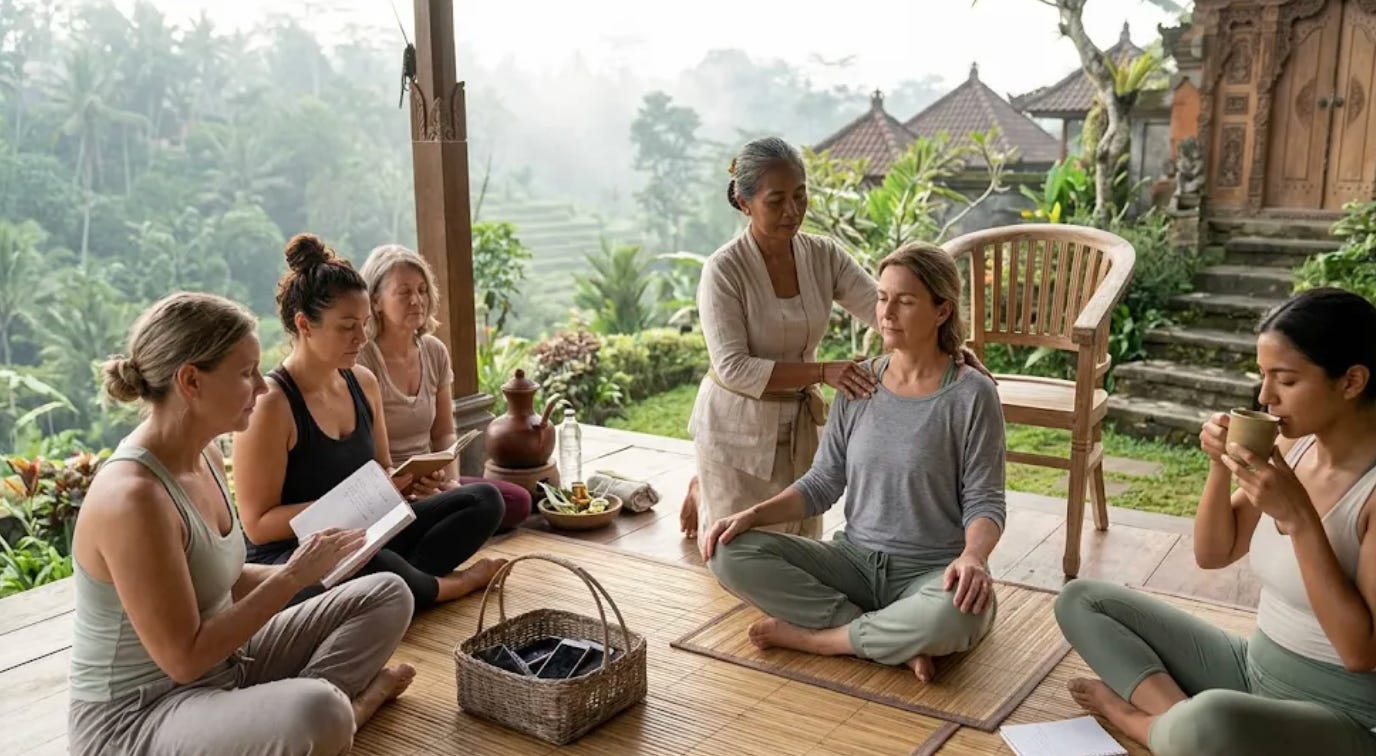
There’s a moment, usually around day four of a Bali wellness retreat, when you stop checking your phone for the time. Your sleep has shifted three hours earlier. Your digestion has settled into something that feels almost normal again. Someone has convinced you that 6am yoga is not, in fact, a personal betrayal. And you realise you’ve been holding tension in your shoulders that predates the current decade.
Bali’s wellness retreats have become something real. Not Instagram fantasy, though there’s plenty of that. But actual healing infrastructure: practitioners who actually know what they’re doing, kitchens designing around nutrition rather than pictures, schedules structured for transformation rather than activity.
For 2026 specifically, Ubud is where the serious wellness happens. Not the Instagram retreats (those are everywhere). The ones designed by people who understand longevity, who’ve studied this, who are quietly turning Ubud into what might be the world’s most accessible wellness hub.
The Wellness Tourism Boom in Bali: What’s Actually Different in 2026
Five years ago, “Bali wellness retreat” meant a yoga class before breakfast and a spa treatment in the afternoon. Now, it means infrared sauna therapy, microbiome analysis, coaching around metabolic repair, herbal protocols drawn from actual Ayurvedic systems, not Instagram approximations.
The shift happened because Bali attracted actual experts. Practitioners who’d trained in Switzerland, California, Thailand, returning to their island with certifications and systems and the willingness to build something proper. Simultaneously, the people coming to Bali for wellness changed. They’re not looking for relaxation (though that happens). They’re looking for repair: metabolic, emotional, cellular.
High-end wellness tourism is now one of Bali’s fastest-growing sectors. Tourism board data from early 2026 shows that wellness-specific retreats are outpacing beach tourism in terms of visitor growth and per-person spend. These guests stay longer (average 7–10 days vs 3–4 for beach tourists), spend more on accommodation, and — critically — come back.
The reason to mention this is practical: more practitioners means more options, wider range of approaches, better infrastructure for genuine healing work.
What Separates Legitimate Retreat Centres from Instagram Ones
This is crucial, because Ubud’s got both. There are places that genuinely do transformation work. There are places that look like they do. The difference compounds over a week.
Legitimate retreat centres: operate within established frameworks (Ayurveda, Functional Medicine, traditional Balinese healing systems with verifiable practitioners, clinical herbalism). They have actual practitioners — real qualifications, not weekend certification. They do health assessments before you arrive. They structure days around protocols rather than activity. They use the word “detox” almost never because it’s marketing language; they say “metabolic support” or “liver protocols” or “parasympathetic reset.” They charge per-day rates between USD 150–300 (accommodation + meals + daily sessions + guidance), not USD 80 (”unlimited services!”).
Instagram retreats: beautiful spaces, excellent photography, vague wellness talk, no real medical or clinical framework, lots of options so you’re never bored, charge USD 60–120 per day, mention “detox” repeatedly, staffed by people with accreditation from online courses.
The honest answer: aesthetic and Instagram appeal correlate inversely with actual healing depth. The places doing the most interesting work often aren’t beautiful in the glossy way. They’re simple, clinical, genuinely organised.
The Best Retreat Centres in Ubud for Actual Transformation
1. Bali Wellness Retreats (Ubud area) — Longevity + Metabolic Focus
Structured around functional medicine protocols. Practitioners are trained in evidence-based approaches. Seven-day minimum. Includes health assessment, daily coaching, herbal protocols, food preparation (they teach you how to continue the work at home, which actually matters). Daily sessions are usually 1-on-1 or small groups, not group yoga.
Expect to understand why you’re eating what you’re eating, why sleep protocol matters, how your nervous system is actually responding. This is not relaxation, though you’ll relax. It’s education in your own biology. Cost: approximately USD 140–280 per day depending on program structure and retreat centre.
2. The Yoga Barn — Yoga + Ayurveda Integration
Established for years, genuinely known. Offers structured programs (not drop-in classes, though those exist too). Their longer programs (7–14 days) integrate Ayurvedic assessment with yoga, pranayama, and herbal support. Teachers are trained; programming is coherent.
The difference from casual yoga studios: they care about your specific constitution (Ayurvedic dosha), not one-size-fits-all class. Mornings are structured; afternoons offer more freedom. Cost: USD 150–200 per day.
3. Karsa Kafe + Healing Spaces (Ubud) — Traditional Balinese + Modern Wellness
Smaller, more intimate. Integrates actual Balinese healing systems (jamu, traditional massage, energy work) with modern understanding. The practitioners are Balinese, trained traditionally. This is where you experience actual cultural healing rather than wellness tourism performed by Western practitioners.
Three-to-seven-day programs. Expect less structure, more intuition. Expect to learn about Balinese concepts of health that predate Western medicine and are still genuinely used. Cost: USD 120–180 per day.
4. Ubud Wellness Center (Multi-Approach)
Flexible programming: you can come for specific modules (metabolic repair week, hormonal balance week, emotional processing week) or generalised wellness weeks. Practitioners are both Western-trained and traditionally trained. The flexibility is useful if you have specific health concerns you want to address rather than vague “wellness.”
Cost: USD 140–200 per day depending on programming.
What an Actual Wellness Retreat Week Looks Like
Day 1: Arrival, assessment, introduction to practitioners and space. Your first evening might be a dinner focused on understanding your digestion and constitution. Early bedtime is encouraged (hint taken).
Day 2: Fasting or very light diet (depends on your assessment; some people start with nourishment instead). Morning session explaining what’s happening biologically. Afternoon quietness. Gentle evening movement. Sleep deepens.
Day 3–4: Introduction to protocols. You might start herbal preparations. Daily coaching in nutrition, sleep, movement. Your phone use decreases. You stop checking the time. Small group activities (cooking classes on specific diets, walks focused on digestion, pranayama sessions).
Day 5: Integration moment. By now, digestion is stable. Sleep is solid. Your nervous system has recalibrated. The work shifts to emotional/energetic. This is where breakthroughs often happen — not because something magical occurred, but because you’re rested enough to actually hear what your body’s been trying to tell you.
Day 6: Consolidation. Learning how to continue this at home. Buying herbal formulas. Getting practitioner contact info for ongoing support. The retreat is ending, but the work isn’t.
Day 7: Gentle conclusion. Often a final session, departure meal (special food to support your transition home), reflection.
The Honest Bit: What Wellness Retreats Actually Deliver (And Don’t)
Wellness retreats deliver: deep rest (this alone has neurological and metabolic effects). Metabolic rebalancing (digestion, sleep, energy improving measurably). Practitioner knowledge you can actually use after you leave. Pathways to your own body’s wisdom (this sounds metaphorical; it’s neurological).
What they don’t deliver: permanent transformation without follow-up. The changes you experience are real, but they’re initial. Returning home to previous habits reverses 60% of what you gain within three months. The retreats work best if you view them as initiation, then practice the protocols at home.
Also: wellness retreats amplify what you bring. If you arrive open, ready, willing to release old patterns, the work goes deep. If you arrive sceptical, looking for magic, you’ll get a nice week and nothing more. The retreat is the catalyst, but you have to be combustible.
Cost Breakdown: What Wellness Actually Costs in Ubud 2026
Budget option (homestay + local practitioners): USD 60–90 per day
Accommodation: USD 20–30 (guesthouse room)
Meals: USD 10–15 (local warungs, simple food)
Practitioner sessions: USD 30–45 (individual traditional massage, herbal consultations)
Total week: approximately USD 420–630
Mid-range (boutique guesthouse + structured programs): USD 120–180 per day
Accommodation: USD 50–70
Retreat program (meals + sessions + guidance): USD 70–110
Total week: approximately USD 840–1,260
Premium (retreat centre + full programming): USD 200–280 per day
All-inclusive (accommodation, meals, daily sessions, medical support, herbal preparations)
Total week: approximately USD 1,400–1,960
How to Choose a Retreat (And Avoid Getting Scammed)
Red flags:
No practitioner credentials visible online
“Detox” mentioned repeatedly
Vague descriptions (”holistic,” “chakra balancing” with no framework)
No medical assessment or health intake
Very cheap (USD 40–60 per day for “all-inclusive” is not possible)
Groups bigger than 15–20 people
Green flags:
Practitioners’ credentials and training listed clearly
Health intake assessment before booking
Clear frameworks (Ayurveda, Functional Medicine, Traditional Chinese Medicine — specific systems, not vague wellness)
Structured programs with actual timings and content
Reviews from repeat visitors
Cost: USD 120+ per day (if it seems cheap, safety/quality compromise exists somewhere)
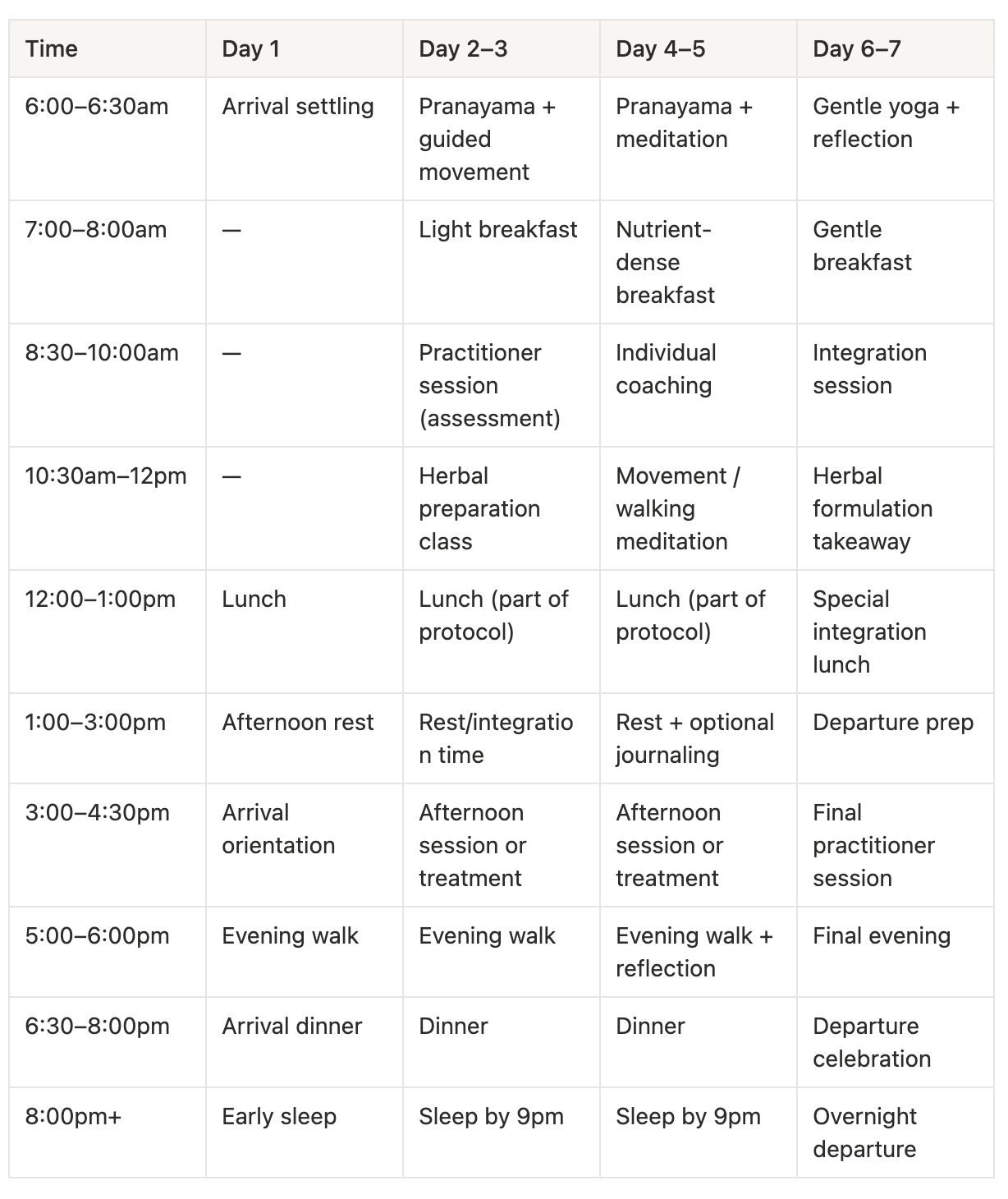
A Seven-Day Wellness Retreat in Ubud: Sample Itinerary
Wellness retreats in Ubud work. Not because of magic, but because they’re structured around biology, held by genuine practitioners, and they give your nervous system permission to actually rest. A week away, properly supported, genuinely resets metabolic and emotional systems that run on autopilot at home.
Whether you stay a week or two, whether you choose the clinical approach or the traditional Balinese approach, the effect is similar: your body remembers what rest feels like. Your digestion settles. Your sleep deepens. Your mind quiets. This isn’t small.
The work of integration — keeping those changes alive when you’re home — is yours. But the initial shift? That’s real. And if you choose a genuine retreat centre with actual practitioners, it might be the most useful week you spend on the island.
FAQs
Q: Do I need to be spiritual to benefit from a wellness retreat?
A: No. The benefits are physiological — rest, metabolic rebalancing, nervous system recalibration. Spirituality is optional. Many retreats offer it; none require it.
Q: Will the food be edible?
A: This depends on the retreat. Most include proper nutrition as part of the protocol — foods might be simple but are carefully chosen. Some meals are genuinely delicious. Some are functional. All are digestible (that’s the point). If food aesthetics matter to you, mention this; practitioners can adjust.
Q: How much weight will I lose?
A: Not a reliable side effect. Some people lose water weight and slight fat loss (maybe 2–3 lbs). Others maintain. The goal isn’t weight; it’s metabolic repair. That said, if digestion improves (common), sustainable weight loss after the retreat is often easier.
Q: Is a wellness retreat safer than other tourism in Bali?
A: Yes. Medical oversight exists. Hygiene is closely managed. You’re in a contained environment. If you have pre-existing health conditions, mention them during booking — retreats will advise if they can support you.
Q: What should I expect emotionally?
A: Deep rest often brings emotions to the surface — sometimes releases (crying, laughter), sometimes clarity. This is normal and is actually the work. Retreat facilitators are trained for this. It’s not harmful; it’s cathartic.
Q: Will my life change after the retreat?
A: The retreat will change how you feel. Whether life changes depends on whether you integrate the protocols. A week of deep rest returning to high stress will reverse 60% of gains within three months. A week of deep rest with follow-up practice at home will sustain the changes.
Q: Are wellness retreats worth the cost?
A: If you’re genuinely interested in understanding your health better and resetting your nervous system, yes. If you’re looking for relaxation + photo ops, you could get that cheaper elsewhere. The value is in the education and the practitioner guidance, not the location.
Q: Do I need to tell anyone I’m going?
A: Yes. Tell work/family where you’re staying. Tell someone your practitioner’s contact. Most people also tell their home doctor (if you have one) about any herbal protocols, just for medical clarity.
A note from Annie
Destined for Bali shares my personal experiences, opinions, and independent research. Everything I write reflects what I’ve found to be true at the time of publishing — but Bali changes constantly, and what works for me may not work for you. Always do your own research and seek qualified professional advice before making decisions about travel, visas, property, business, health, or anything else that matters. Some links in my posts are affiliate links, meaning I may earn a small commission at no extra cost to you. Sponsored content is always clearly labelled. Read the full Terms and Privacy Policy.