
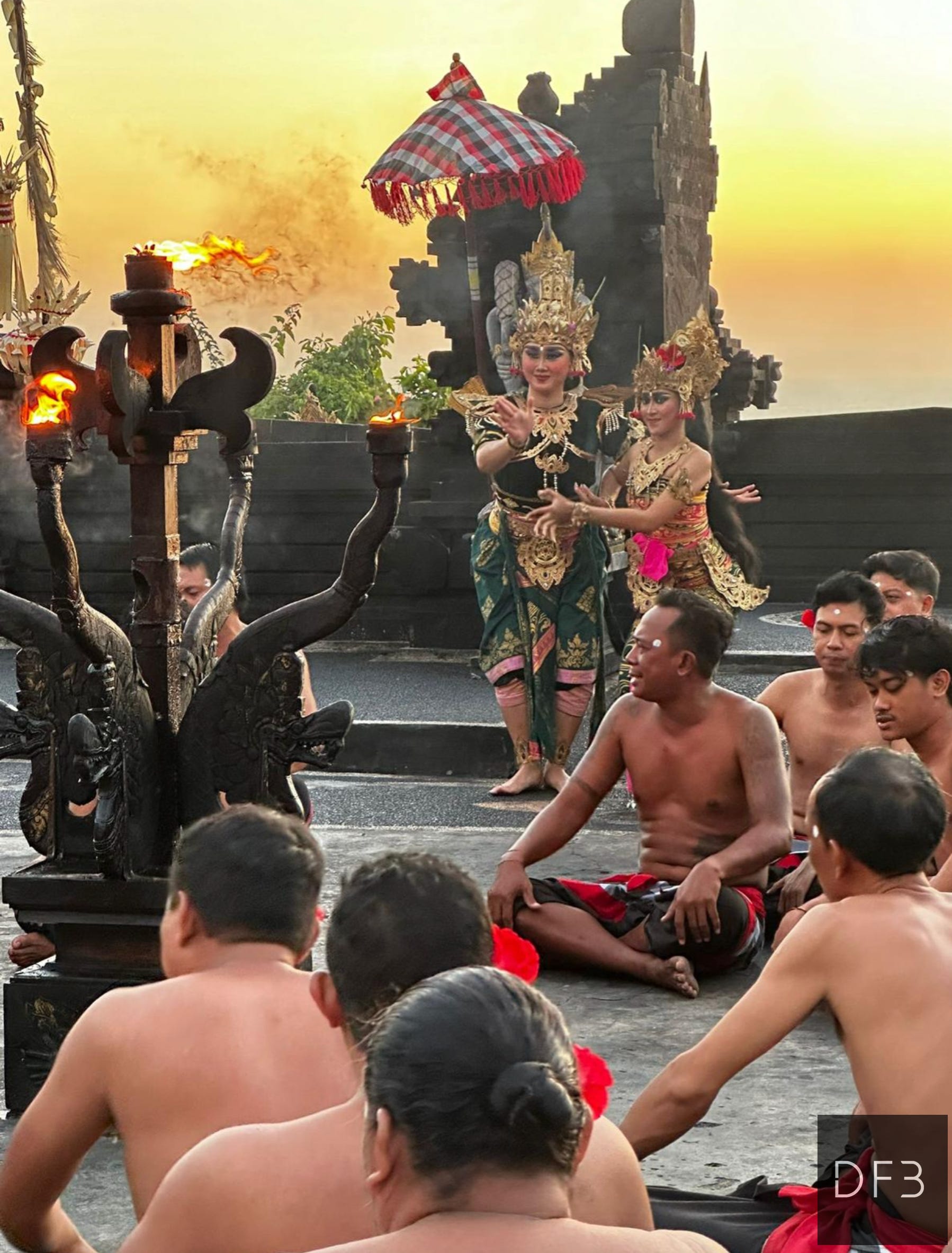
Moving to Bali without experiencing its dance tradition feels incomplete. Dance isn’t performance here—it’s spirituality. It’s daily devotion. It’s how Balinese people honour their ancestors and Hindu gods. Every gesture means something. Every hand position tells a story spanning centuries.
Most visitors watch dance at tourist performances. You sit, applaud, and leave. But as someone relocating to Bali, you have a chance most travellers never do: to learn directly. To feel how your body carries meaning. To spend weeks moving like a Balinese dancer. To understand the island through movement rather than observation.
Balinese dance lessons exist specifically for expats and digital nomads settling here. Studios in Ubud, small temples with community programmes, and cultural centres run classes for all levels. The experience transcends fitness. It becomes meditation, cultural education, and a genuine connection to the island’s spiritual heart.
The Sacred Significance of Balinese Dance
Balinese dance emerged from Hindu-Buddhist temple ceremonies over a thousand years ago. It isn’t entertainment created for tourists. It’s a spiritual practice. Dancers are trained as young children to move with intention, to embody gods, to invite spiritual presence into their bodies.
In Balinese Hindu philosophy (unique from Indian Hinduism), dance is trance and devotion. The dancer’s goal is often fana—temporary dissolution of ego. Some performances genuinely invite possession by spiritual entities. This sounds esoteric to Western ears, but it’s essential context. When you learn Balinese dance, you’re learning a religious practice, not just choreography.
This matters practically. Dancers maintain strict protocols. Certain movements require purification. Some dances can’t be learned outside temple contexts. This isn’t restriction—it’s respect. Understanding these boundaries is part of cultural immersion.
UNESCO listed Balinese dance as Intangible Cultural Heritage in 2008. This recognition reflects its significance beyond Bali. The island’s dances represent human cultural achievement worthy of global protection.
For expats staying long-term, learning dance transforms how you see Bali. Instead of an exotic backdrop for your digital nomad life, it becomes a living tradition you’re part of.
Main Dance Forms: Legong, Kecak, Barong & Pendet
Legong is the most refined classical dance. It’s feminine, graceful, and technically demanding. Movements are minute—fingers, eyes, and tiny hip rotations carry meaning. Traditionally, Legong dancers trained from childhood; girls often retired by their late teens. Legong tells stories from Hindu epics, particularly romantic tales involving princes and princesses. Watch Legong once, and you’ll understand why it’s called “the diamond of Balinese culture.”
Kecak (pronounced “chak”) is fire, trance, and raw energy. This dramatic form involves dozens of male dancers rhythmically chanting whilst occasionally bursting into ferocious movement. Kecak emerged relatively recently (1930s) as an adaptation of older trance ceremonies. It’s male-dominated, physically intense, and hypnotic to watch. Learning Kecak means embracing the chanting and the collective energy.
Barong is the dance-drama of spiritual battle. A mythical beast (Barong) fights a witch (Rangda) in eternal struggle between good and evil. It’s theatrical, colourful, and spiritually significant. Barong involves multiple characters and tells stories over 30+ minutes. Learning full Barong takes years, but tourists can learn basic movements and understand its narrative.
Pendet is the greeting dance—a welcome ceremony. Women move gracefully with flowers and offerings. It’s less technically demanding than Legong but deeply meaningful. Pendet appears at temple ceremonies and welcomes guests. It’s often the first dance taught to beginners because it establishes foundational movements.
Where to Learn as a Visitor: Studios & Cultural Centres
ARMA (Agung Rai Museum of Art), Ubud runs excellent dance programmes. Their studios offer Legong and Balinese dance fundamentals in 1.5–2 hour sessions. Classes run mornings and afternoons, suitable for various levels. Cost is around 300,000–400,000 IDR (£15–£20) per class. Staff are traditionally trained, and the museum setting connects dance to broader Balinese art. This is an ideal starting point for serious learners.
Pura Saraswati, Ubud is a functioning Hindu temple offering community dance classes. This feels more authentic than studio settings. Learning in a temple space where worship happens daily changes how you experience the dance. It’s less polished but more genuine. Classes are cheap (100,000–150,000 IDR / £5–£7). Respectful behaviour and modest dress are essential here. This is sacred space.
Mudra Swari Saraswati, Ubud specialises in Legong training. This is the most traditional option. Classes are rigorous and authentic. They teach as temples do—with spiritual intention, not entertainment focus. It’s less touristy and more demanding. This suits people committed to genuine learning.
Sayan House Dance Studio, Ubud offers recreational dance for expats and digital nomads. Classes are friendlier to absolute beginners and shorter (45 minutes–1 hour). Cost is lower (150,000–250,000 IDR / £7.50–£12.50). Good if you want cultural experience without intensive training.
Canggu Beach Clubs sometimes offer Balinese dance workshops as evening activities. Quality varies, but they’re accessible and social. Often combined with dinner or drinks. Cost is higher (300,000–600,000 IDR / £15–£30) because you’re partly paying for the venue experience.
Private instructors exist throughout Bali. Ask at your accommodation or local Facebook groups. Private sessions cost 250,000–600,000 IDR (£12.50–£30) depending on the instructor’s experience and your location.
What a Dance Lesson Actually Involves
Classes begin with awareness. You’ll likely feel stiff. Balinese movement requires flexibility different from Western exercise. The spine stays relatively straight whilst hips and shoulders undulate subtly. This challenges dancers trained in completely different systems.
Instructors start with basic hand movements (mudra). Each hand shape has meaning. A particular finger position honours a deity. This symbolic language takes time to absorb. You won’t “get” every meaning immediately—that takes months of practice.
Music accompanies every movement. Balinese gamelan orchestras play hypnotic, layered sounds. You’ll learn to move in sync with this soundscape. Initially, counting feels foreign. Soon, your body anticipates the music’s rhythm. This develops muscle memory and presence simultaneously.
Lessons usually follow a structure: warm-up and basic movements (20 minutes), then a specific dance or dance section (30–50 minutes). Classes end with repetition and refinement. Advanced classes add narrative—understanding the story the dance tells.
One class gives you basic steps. Ten classes give you technique. Twenty classes transform movement into a genuine practice. Most expats commit to weekly or twice-weekly classes for 2–6 months to feel real progress.
Respecting Culture: Etiquette & Appropriate Behaviour
Modesty is paramount. Wear sarongs or long pants and sleeved shirts. Bare shoulders and short shorts are disrespectful in temple settings. Many studios don’t enforce this, but doing it anyway shows respect.
Remove shoes when entering temples or sacred spaces. This is simple and important.
Ask before filming. Some teachers allow it; others don’t. Recording sacred practices can be spiritually problematic. Ask permission explicitly.
Menstruation traditionally restricted women from temple participation. Many temples still observe this. Ask if this affects class participation. No judgment—it’s cultural practice.
Photographs in temples require permission. Don’t assume it’s allowed.
Arrive early. Punctuality shows respect. Leaving early disrupts the class energy.
Listen more than you talk initially. Observe how Balinese students interact with teachers. There’s hierarchy and respect embedded in the culture. Mimic this.
Don’t touch teachers or adjust your positioning without permission. In some traditions, touch carries spiritual weight.
If you’re learning in temples, wear jewellery tastefully. Excessive or extremely trendy accessories can seem disrespectful to sacred spaces.
Making It Part of Your Bali Experience
Dance becomes truly meaningful when you commit to consistency. Weekly classes for a minimum of two months creates real skill and genuine cultural understanding. You’ll feel transformation—not just in movement but in how you inhabit your body.
Many long-term expats integrate dance into their weekly routine. It becomes meditation, fitness, and cultural practice rolled into one. Friendships form. You’ll train alongside locals and fellow expats, creating community.
Attending live performances amplifies learning. Understanding where dances originate spiritually deepens when you watch them in temple or concert settings. Many studios offer field trips to temple ceremonies. Take these. The context makes everything click.
Consider longer intensives. ARMA and other institutions run week-long or month-long programmes for serious students. These immerse you completely. Costs run 2–5 million IDR (£100–£250) for a week, plus accommodation.
Dance connects you to Balinese spiritual life in ways tourism never does. You’re not observing culture—you’re participating. You’re learning one of humanity’s oldest continuous traditions. That shift in perspective is transformative.
Learning Balinese dance as a resident of Bali offers something tourists never experience: depth. You’re not chasing an Instagram moment. You’re genuinely participating in spiritual and cultural practices that sustains this island.
Your first class will feel awkward. Your hips won’t move how they’re supposed to. Your hands will rebel. That’s perfect. Discomfort means you’re learning something genuinely foreign. Persistence builds skill and understanding simultaneously.
The real magic isn’t becoming proficient. It’s experiencing Bali through Balinese perspectives. Dance teaches you how Balinese people see spirituality, beauty, and meaning. It transforms you from observer to participant in island life.
Whether you take one class or commit to years of training, Balinese dance reveals why this island moves and inspires millions. You’ll understand the magic from the inside.
Have questions about life in Bali? I’d love to help—feel free to reach out via Substack.
FAQs
Q: Do I need dance experience to start Balinese dance classes?
No. Beginners are welcome at most studios. Balinese dance teaches a completely different movement system, so prior dance experience doesn’t matter. Starting fresh is actually easier than relearning old habits.
Q: How long until I can perform or attend ceremonies?
That depends on commitment. Casual classes (2 months, once weekly) teach basics. Real competency takes 6–12 months of regular practice. Temple participation requires understanding spiritual protocols, usually learned over months.
Q: Is there an age limit for Balinese dance lessons?
No. Studios welcome children through elderly adults. Classes are tailored by level rather than age. Some studios offer children ’s-specific classes; most mix ages. Your body’s capability matters more than your age.
Q: Can men learn Balinese dance?
Absolutely. Some dances are traditionally male (Kecak, Barong). Women dominate classical forms like Legong, but men can learn these too. Studios welcome all genders.
Q: What should I wear to my first class?
Comfortable, modest clothes. Many studios provide sarongs. Wear light layers—it gets warm. Remove jewellery that might restrict movement. Go barefoot or in soft shoes if the studio allows.
Q: How much do dance lessons cost in Bali?
Group classes run 100,000–400,000 IDR (£5–£20) per session depending on location and instructor status. Private lessons cost 250,000–600,000 IDR (£12.50–£30) per hour. Monthly passes (4–8 classes) offer discounts around 400,000–1,200,000 IDR (£20–£60).
Q: Can tourists take just one or two classes?
Yes. Drop-in classes welcome one-off visitors. However, Balinese dance genuinely benefits from consistency. One class is fun; two months of classes becomes transformative. If you’re staying in Bali, commit to regular attendance.
Q: Which dance form is easiest for beginners?
Pendet (the greeting dance) and Balinese dance fundamentals are most accessible. Legong is the most technically demanding. Kecak is physically intense but rhythmically straightforward. Ask studios what they recommend based on your goals.
Q: Are there online Balinese dance classes if I can’t attend in person?
Some studios offer virtual classes, though learning requires in-person correction of movement. Online works for refreshers or gentle fitness, but authentic learning happens in-person with a qualified teacher.
Q: How do I find respectful, legitimate dance instructors in Bali?
Ask at cultural museums, temples, and established coworking spaces. Check reviews from other expats. Legitimate teachers often work through institutions like ARMA or established studios. Avoid one-off instructors offering sessions in tourist areas.