
Bali's Warungs and Local Food Culture: What Expats Actually Eat (Beyond the Tourist Trail)
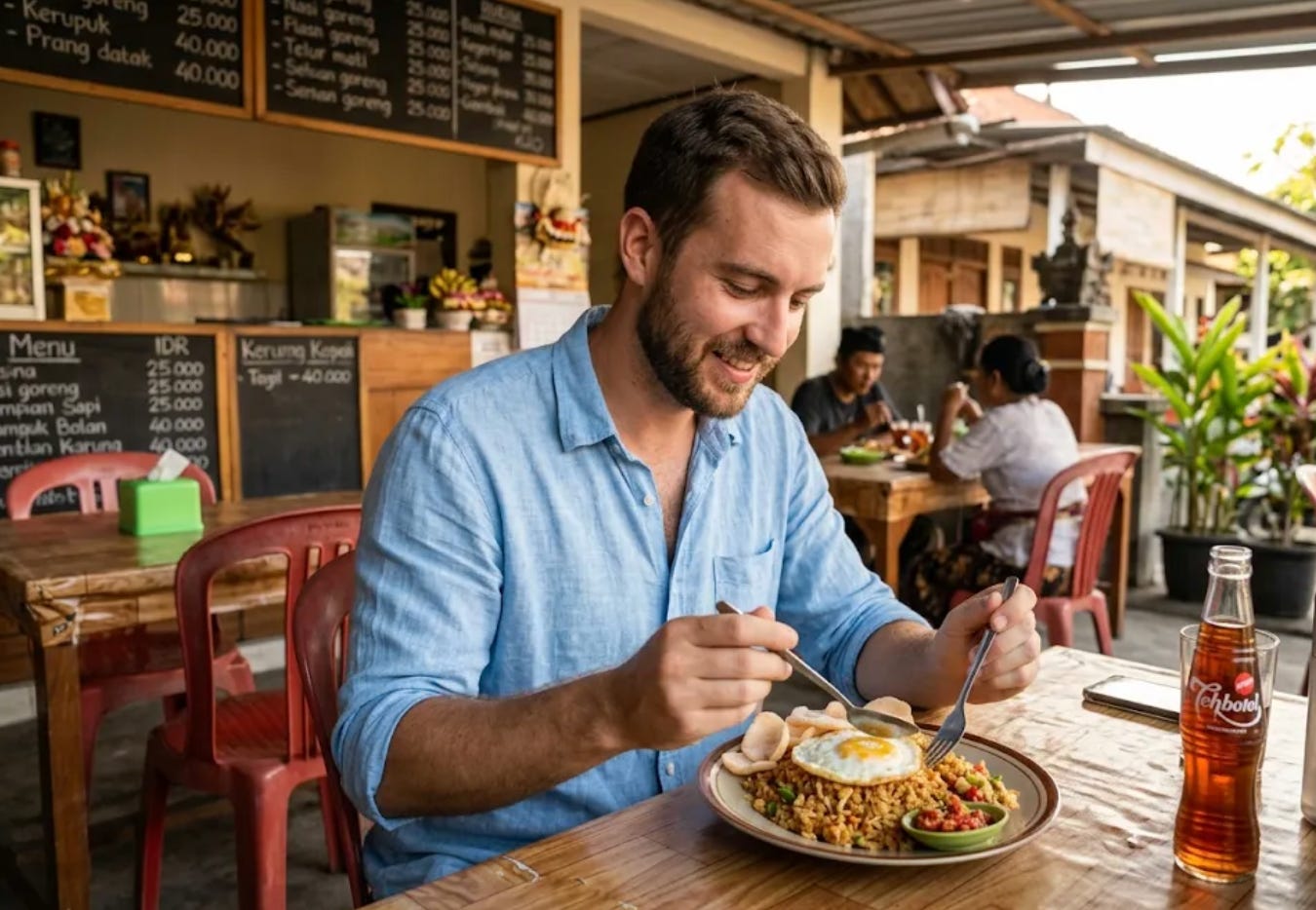
There’s a version of Bali you see in photos: rice paddies, temples, sunsets over infinity pools, plates of fresh tropical fruit. And then there’s the Bali you live in — the one where your life revolves around finding the best warung (small, family-run restaurant) that serves a proper plate of nasi goreng at 7 am for less than you’d spend on a coffee at home.
I spent my first three months in Bali eating at restaurants in Seminyak, which was a mistake. Beautifully plated, Instagram-ready food served by people trying to appeal to tourists. Then I found the warungs — the actual places where local families eat, where menus are handwritten (or just yelled at you), where your total bill might be 35,000 IDR and the food is genuinely, frustratingly better than anything in the upscale areas.
If you’re moving to Bali for the long term, this is where your money goes. Not to resort restaurants, but to the small cafés and warungs that feed the island.
The Warung System: How Food Works in Bali
A warung isn’t just a restaurant — it’s a social institution. Typically family-run, often with a simple counter and maybe a handful of plastic tables. The menu is whatever the owner decides to cook that morning, sometimes with one or two signature dishes.
Prices: a plate of nasi goreng runs 25,000–40,000 IDR (£1.25–£2 ). Gado-gado (vegetable salad with peanut sauce) is 20,000–30,000 IDR. A fried fish with rice, 40,000–60,000 IDR. This is how the island actually eats.
What matters: warungs aren’t “trying to be fancy.” The owner cares about flavour and value, not presentation. That’s why the food is often better than places charging 10 times as much.
Where Expats Actually Eat (The Unwritten Map)
Every expat neighbourhood has its warungs — places tourists never find because they have no signage, no WiFi, sometimes no English menu. These become your life after a few months.
Canggu’s Hidden Spots
Canggu has trendy cafés on every corner, but the locals eat elsewhere. There’s a cluster of warungs near the Canggu football field (lapangan) where you’ll see Indonesian families, construction workers, and long-term expats sitting side by side. Nasi goreng, soto ayam (chicken soup), satay — all genuine, all cheap, all delicious.
Pricing is transparent: menus are written on chalkboards, and prices are fixed. You order, sit, eat. Leave 40,000 IDR, and you’ve had a better breakfast than anywhere in Seminyak.
Ubud: Where Food Culture Peaks
Ubud is where you find food done with intention. Less touristy than Canggu (though still plenty of tourists), but genuinely devoted to quality ingredients and traditional preparation. Market Street in the mornings becomes a breakfast destination: fresh juices, local pastries, grilled fish.
Recommendation: explore the market itself (Pasar Tradisional Ubud). It’s overwhelming at first — raw meat, live animals, vegetables you don’t recognise — but this is where restaurants source their ingredients. Spend 30 minutes here, watch how food is selected and negotiated for, and you will understand Balinese food culture differently.
Warungs in Ubud often have family recipes refined over decades. Orders are slower (more care taken), prices are still reasonable (30,000–50,000 IDR for a proper meal).
Seminyak: The Tourist-Proof Exceptions
Seminyak is where you go if you want Instagram-friendly food. Most of it deserves that label — pretty but forgettable. But there are exceptions: places where the chef actually cares, where the premium pricing reflects genuine quality rather than just beachfront real estate.
These are harder to find and require asking locals rather than reading reviews.
The Food You Actually Eat Daily
If you’re living in Bali on a reasonable budget, your daily food rotation becomes:
Breakfast (6–9 am): Nasi goreng or nasi kuning (yellow rice) with a fried egg, from a warung. Sometimes mie goreng (fried noodles). Coffee if the warung serves it (many don’t — you go elsewhere for that). Cost: 25,000–40,000 IDR.
Lunch (12–1 pm): Usually the biggest meal. A plate of rice with several accompaniments — satay, grilled fish, stir-fried vegetables, sambal (chilli paste). Might eat at a warung or at a café that serves both tourist and local food. Cost: 35,000–80,000 IDR depending on location and protein.
Dinner (6–8 pm): Lighter — noodles, another rice dish, sometimes soup. This is when many expats try new places or eat at home. Cost: 25,000–60,000 IDR.
Snacks between: fresh fruit (mangoes, papayas, dragon fruit from street vendors), coconut water from a cart, coffee at 15,000–25,000 IDR.
Monthly food budget for one person living on actual Balinese food: 2–3 million IDR (£100–150). That’s eating well, often eating out, and not particularly budget-conscious.
The Quality Question: Why Balinese Food Tastes Different Here
Food in Bali tastes better than the same dishes elsewhere because: ingredients arrive fresh daily, labour costs mean slow cooking is viable, and local pride means people actually care about flavour.
A satay from a warung in Ubud isn’t just meat on a stick — it’s been marinated for hours, grilled with attention, served with peanut sauce made that morning. That matters.
Compare that to a satay in a London Thai restaurant where everything is pre-made and reheated, and the difference becomes obvious.
If you move to Bali expecting fine dining, you’ll miss the actual food culture. The best meals happen at warungs, in plastic chairs, for less than a coffee costs in your home country. Let yourself eat like a local. Skip the Instagram cafés occasionally. Find your warung. Become a regular. That’s where you’ll find genuine Balinese hospitality and genuinely great food.
The island’s real food culture isn’t in restaurants trying to impress you. It’s in family-run places where someone’s been cooking the same rice, the same sauce, the same satay for 20 years.
FAQs
Q: Is eating at warungs safe? What should I know about food hygiene?
A: Most warungs are safe, especially ones where locals eat regularly (high turnover = fresh food). That said, hygiene standards are less regulated than in Western restaurants. Look for places where locals queue, watch your food being prepared, and start slowly if your stomach isn’t accustomed to local bacteria. Eat at the busiest stalls during peak hours (freshest food). Trust your instincts.
Q: What’s the difference between a warung and a restaurant?
A: A warung is typically family-run, simple, informal, with minimal décor and transparent pricing. Menus are limited (often handwritten). A restaurant is more formal, has waitstaff in uniforms, printed menus, and higher prices. Both serve good food, but warungs represent authentic, budget-friendly local eating.
Q: How much should I budget for food if I eat at warungs?
A: A single meal costs 25,000–60,000 IDR (£1.25–3). If you eat one warung breakfast, one lunch, one dinner daily: roughly 90,000–150,000 IDR per day (£4.50–7.50). Monthly: 2.7–4.5 million IDR (£135–225). This is genuinely affordable compared to restaurant dining.
Q: Do I need to speak Indonesian to order at a warung?
A: Not required. Most warungs have picture menus or you can point to what you want. Learning basic words helps (makan = eat, minum = drink, enak = delicious), but it’s not essential. Pointing and smiling works surprisingly well.
Q: What are the most popular warung dishes?
A: Nasi goreng (fried rice), mie goreng (fried noodles), gado-gado (vegetable salad with peanut sauce), soto ayam (chicken soup), satay, fried fish, lumpia (spring rolls), perkedel (fried potato cakes). Sides include sambal (chilli paste), fried shallots, and prawn crackers.
Q: Are warung kitchens clean? What precautions should I take?
A: Warung kitchens are basic but functional. The standard isn’t Western-level regulated hygiene. Start with places where locals eat (safer indicator). Avoid raw salads if your stomach isn’t accustomed to local water. Drink bottled or boiled water. Eat hot food (safer than cold). Your tolerance builds over weeks.
Q: What’s the best time to eat at a warung?
A: Breakfast (6–9 AM) and lunch (11 AM–1 PM) are ideal. Food is freshest, crowds are busiest, and the energy is high. Dinner varies by warung—some close early, others stay open late. Ask locals for recommendations on timing.
Q: How do I find good warungs if I’m new to an area?
A: Walk residential neighbourhoods during meal times. Follow the crowds—locals know where to eat. Ask expats who’ve lived there longer. Ask your accommodation staff. Google Maps reviews from local users (not tourists) are helpful. Look for places where you see construction workers and families eating.
Q: Can I negotiate prices at warungs?
A: No. Warung prices are fixed and displayed (or quoted clearly). Negotiating is inappropriate and considered rude. That’s one of the beautiful things about warungs: transparent, fair pricing. You pay what’s listed.
Q: Is tipping expected at warungs?
A: No. Tipping isn’t part of warung culture. Leave your money, say terima kasih (thank you), and you’re done. If you want to be kind, leaving 5,000 IDR for exceptional service is appreciated but not expected.
Disclaimer
Food Safety and Health: Eating at warungs carries different food safety standards than formal restaurants in Western countries. While most warungs are safe—especially those frequented by locals—hygiene practices vary. If you have a sensitive stomach, food allergies, immune compromise, or are pregnant, consult your healthcare provider before eating street food or at informal warungs. Always practice basic food hygiene: watch preparation, choose hot foods over cold, and drink bottled water. Your tolerance to local food bacteria will build over weeks as your body adapts.
Pricing and Currency: All prices mentioned are current as of May 2026 in Indonesian Rupiah (IDR). Exchange rates and prices change regularly. Warung pricing may increase during tourism peaks or inflation. Always verify current prices before planning your budget. The IDR to GBP conversion (used in this article) is approximate and fluctuates daily.
Personal Experience: This article reflects my lived experience as an expat in Bali. My warung recommendations are based on personal visits and conversations with long-term residents. “Best” is subjective—your favourite warung may be different from mine. Warung quality, ownership, and operating hours can change. Always check current status (Google Maps, local recommendations) before visiting.
Restaurant Closures: Warung ownership changes, locations shift, and establishments close without notice. Any warung mentioned or referenced may have changed status, ownership, or pricing since this article was written. Verify current information with locals or through recent online reviews before planning a visit.