
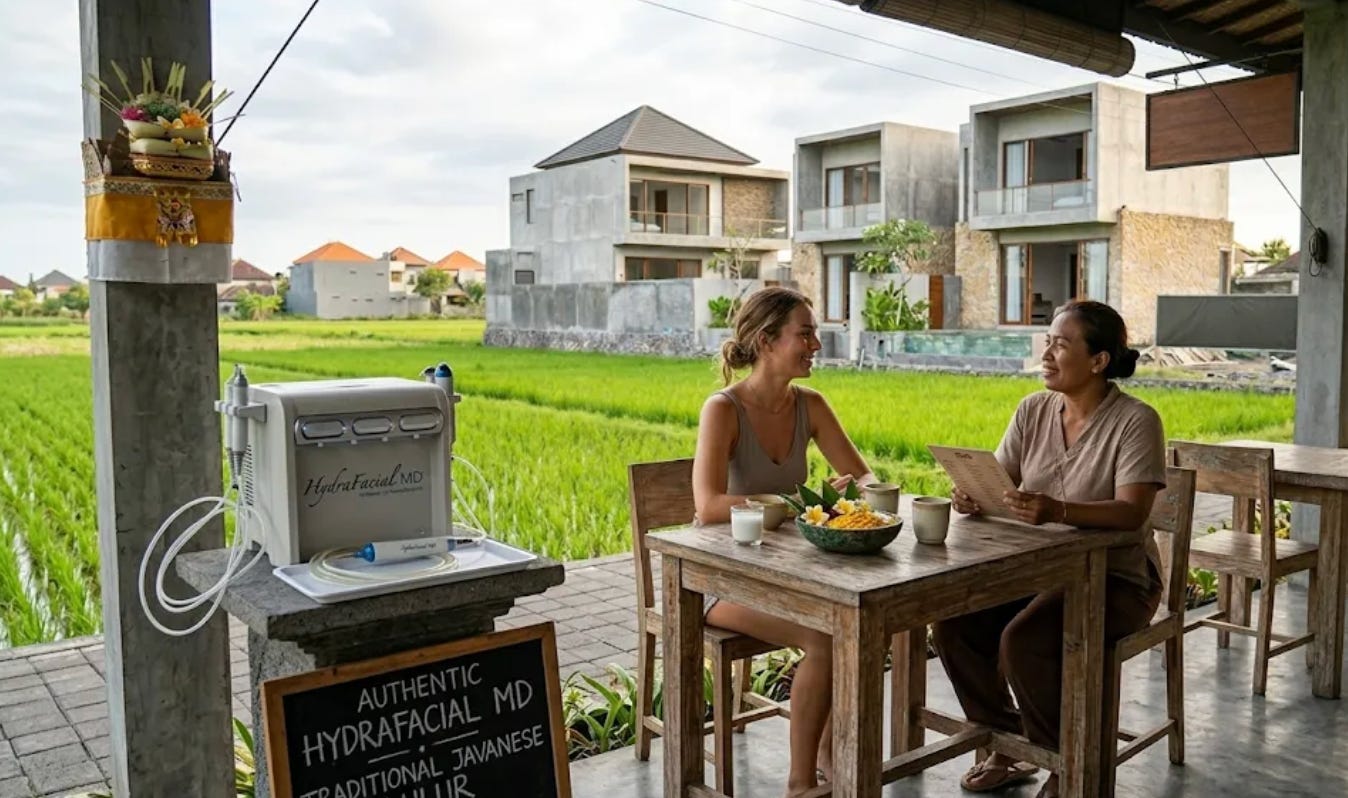
My first facial in Bali was a disaster of my own making. I walked into a beautiful spa in Seminyak, pointed at a photo of someone with radiant skin on the menu, said “that one,” and handed over my credit card. What I got was lovely but completely wrong for my skin — a thick, coconut-heavy treatment designed for dry skin when mine was combination and already reacting to the humidity. I walked out looking puffier than I went in.
The good news: that is entirely avoidable. The best facials in Bali are genuinely extraordinary, the price difference compared to the UK is dramatic, and the variety available means there is something excellent for every skin type. But the variety is also the challenge. Bali offers everything from thousand-year-old Javanese lulur rituals to the same clinical HydraFacial MD machines you would find on Harley Street — often within the same postcode. Knowing the difference, and knowing which one your skin actually needs, matters.
This article goes through the full landscape: what each treatment type does, who it is for, what it costs, and where to book it.
The Facial Problem: Too Many Options, Not Enough Honest Reviews
Why Facial Choice Actually Matters in Bali’s Humidity
Bali’s humidity is wonderful for certain skin types and a genuine challenge for others. If your skin tends towards oiliness or combination, the elevated moisture in the air can tip it towards congestion, breakouts, and an unwelcome shine that no blotting paper can fully manage. Richer, oil-based treatments that would be nourishing in a cold, dry climate can feel suffocating on tropical skin. On the other hand, if your skin runs dry or sensitive, Bali’s humidity is already doing half the work for you, and stripping facials can be counterproductive.
This is why asking your therapist the right questions before booking matters. A good therapist will ask about your skin before recommending a treatment. If nobody asks you anything, that is a signal to manage your expectations accordingly.
Traditional Treatments: The Lulur and What It Does
What’s Actually in a Lulur
The mandi lulur — literally “bathing in the lulur paste” — is a Javanese royal beauty ritual that has been practiced for centuries and remains one of the most iconic treatments available at Balinese spas. The paste itself is the point. A traditional lulur contains turmeric (anti-inflammatory, brightening), sandalwood (cooling, fragrant), cinnamon (circulation-stimulating, warming), and rice powder (a gentle mechanical exfoliant). Some versions add jasmine, frangipani, or coconut milk to the final rinse.
These ingredients are not in the paste because they smell nice. Turmeric contains curcumin, which measurably reduces skin inflammation. Rice powder provides exfoliation without the micro-tearing that coarser scrubs can cause. Sandalwood has demonstrated antimicrobial properties. The lulur is essentially what the modern skincare industry is now repackaging and selling at a 2,000% markup — except the spa version is fresh, applied by a skilled therapist, and costs around 350,000–600,000 IDR.
What to Expect During a Lulur Treatment
The lulur is a full-body ritual, not a facial in the western sense — though facial versions exist. A traditional session begins with a Balinese massage to warm the muscles and stimulate circulation, followed by the lulur paste being applied and worked in circular movements across the body. The paste is left briefly to dry slightly before being gently removed, sloughing away dead skin cells as it goes. A flower bath or milk rinse usually closes the treatment.
The result is extraordinarily soft skin that feels clean without feeling stripped. Expect a noticeable brightness and smoothness that lasts several days. This is not a treatment for targeting specific skin concerns like congestion or pigmentation — it is a restorative, nourishing ritual, and it delivers exactly what it promises.
Modern Facials: HydraFacial, Chemical Peels, and Beyond
Why HydraFacial MD Works Particularly Well in a Tropical Climate
The HydraFacial Bali has become the default recommendation for anyone arriving in a tropical climate with skin that needs clarity rather than hydration. The reason is specific to how the machine works. Unlike many facials that add products to the skin, HydraFacial’s vortex technology simultaneously extracts debris and congestion from the pores while infusing serums — removing what shouldn’t be there and replacing it with what should. For skin dealing with humidity-induced congestion, this dual action is genuinely effective.
Body Lab Bali in Seminyak uses the HydraFacial MD machine — the same US-manufactured device used in London and Sydney clinics — and their therapists are properly trained on it. The experience is 60–75 minutes and the results are immediate: noticeably clearer pores, reduced surface congestion, and a brightness that photographs well (which is how it became so popular with the TikTok crowd). Body Lab’s signature HydraFacial is priced at approximately 1,100,000 IDR. For context, a comparable session in London starts at around £150.
Firefly Laser & Aesthetic Boutique in Canggu is another strong option, particularly well-regarded for HydraFacials suited to acne-prone skin. They offer a thorough consultation before treatment, which makes a real difference for anyone whose skin is in an active breakout phase.
Chemical Peels and Enzyme Treatments: What to Know Before You Book
Chemical peels in Bali range from light enzyme treatments to medium-depth acid peels, and the difference matters enormously for anyone planning a beach holiday. A light enzyme peel — using papaya or pineapple enzymes — removes dead skin cells gently with no downtime and is perfect for a brightness boost mid-trip. A medium chemical peel, typically using glycolic or lactic acid, produces more dramatic results but requires 3–5 days away from direct sun while the skin recovers.
My general advice: book an enzyme peel or a light chemical peel in the first half of your trip, not the last two days. The results continue developing for 48–72 hours after treatment, and you want to be there to enjoy the payoff, not sitting on a plane home.
The Comparison: Traditional vs Modern — Which One Is Right for You?
When to Choose Traditional
Book a lulur or traditional Balinese facial if: your skin is generally healthy and you want a restorative, nourishing experience rather than a corrective one; you are sensitive to acids or active ingredients; you want the cultural experience alongside the skin benefits; or you are on a tighter budget and want excellent value. Traditional treatments at reputable spas in Seminyak start from around 350,000 IDR.
When to Choose Modern
Book a HydraFacial, enzyme peel, or medical-grade facial if: your skin has arrived with congestion, breakouts, or dullness; you have specific concerns like pigmentation, fine lines, or uneven texture; you want measurable, targeted results; or you are already mid-trip and your skin is reacting to the climate. Clinical facials at good Bali clinics run from approximately 500,000 IDR for a basic botanical cleanse to 1,100,000 IDR and above for a full HydraFacial MD session. Still a fraction of what you would pay at home.
The honest answer? Most people staying longer than a week benefit from both. Traditional early in the trip to nourish and reset, clinical mid-trip to address anything the humidity has stirred up.
Where to Book: The Clinics Worth Your Time in 2026
Top Recommendations by Area
Seminyak and Legian: Body Lab Bali for HydraFacial MD and clinical facials; Cocoon Medical Spa for medical-grade treatments; Mello Spa for LED-enhanced facials and combination treatments.
Canggu: Firefly Laser & Aesthetic Boutique for HydraFacial and acne-focused treatments — particularly well-reviewed on Fresha with detailed consultation before every session.
Ubud: Healthy Look Aesthetic at Ubud Nyuh Bali Resort for a more clinical experience in a stunning jungle setting; most of Ubud’s traditional spa offerings are excellent for lulur and herbal-based treatments.
Uluwatu: THE X Beauty Lounge for a full menu of modern treatments, from microneedling to facials and IV therapy.
Across all areas, checking Fresha and Google reviews from 2025–2026 before booking gives you the most current picture of consistency. Bali’s spa landscape evolves quickly.
The range of facials available in Bali is, honestly, one of the most compelling reasons to time a beauty-focused trip here. Where else can you have a traditional Javanese lulur ritual one afternoon and a clinical HydraFacial MD the next morning — and spend less than £100 on both combined?
Do your homework before you book, ask what is in the treatment and whether it suits your skin type, and do not schedule anything with acids or active exfoliants on your last day. The rest is genuinely hard to get wrong.
Have questions about which facial is right for your skin in Bali? Drop them in the comments — I read every single one.
FAQs
Q: What is the best facial to book in Bali for glowing skin?
A: For immediate glow, a HydraFacial MD is the most reliable choice — it extracts congestion and infuses brightening serums in a single session with no downtime. For a nourishing, cultural experience, a traditional lulur body treatment or Balinese facial provides beautiful softness and brightness through botanical ingredients like turmeric, rice powder, and sandalwood.
Q: How much does a facial cost in Bali?
A: Prices vary widely. A traditional Balinese facial or lulur scrub starts from around 350,000–600,000 IDR (approximately £17–£29 GBP). A HydraFacial MD at Body Lab Bali is approximately 1,100,000 IDR (around £54 GBP). A botanical cleanse facial runs around 500,000 IDR. All represent significant savings compared to equivalent treatments in the UK or Australia.
Q: Is a HydraFacial good in Bali’s humidity?
A: Yes — in fact, it is particularly well-suited to tropical climates. HydraFacial’s vortex-extraction technology removes congestion caused by humidity and excess oil while simultaneously infusing hydrating serums. It addresses the specific skin challenges that Bali’s climate creates, without the downtime of more aggressive treatments.
Q: What is a lulur treatment and is it worth it?
A: A lulur is a traditional Javanese royal beauty ritual involving a spiced paste (turmeric, rice powder, sandalwood, cinnamon) applied after a Balinese massage and followed by a milk or flower bath rinse. It is deeply nourishing, exfoliating, and leaves skin remarkably smooth. It is absolutely worth trying — both for the skin results and the experience itself.
Q: Where is Body Lab Bali located?
A: Body Lab Bali is located in Seminyak and is one of the most consistently recommended clinics for HydraFacial MD treatments in Bali. They use the authentic US-manufactured HydraFacial machine and have trained therapists. Booking is available via their website or Fresha.
Q: Can I get a chemical peel in Bali before going to the beach?
A: It depends on the peel. A light enzyme peel has minimal sun sensitivity and is fine before beach activities if you use high-SPF sun protection. A medium or deeper acid peel requires 3–5 days away from direct sun for skin to recover. Book deeper peels earlier in your trip, not the day before a full beach day.
Q: What facial is best for oily or acne-prone skin in Bali?
A: HydraFacial is the most frequently recommended option for oily and congested skin in Bali’s climate — the extraction step is particularly effective. Firefly Laser in Canggu has a strong track record with acne-prone skin specifically and offers a thorough consultation before every treatment. Blue LED therapy is also a useful complement for active breakouts.
Q: How do I know if a Bali spa is using a real HydraFacial MD machine?
A: Look for the HydraFacial brand name specifically — “HydraFacial MD” — and check that the clinic is a verified HydraFacial provider. Body Lab Bali and Firefly Laser Bali are confirmed providers. If a spa offers a “hydra facial” without the MD branding or at very low prices (under 400,000 IDR), it is likely using a generic machine that works differently.
Q: Are Bali facials safe for sensitive skin?
A: Yes, provided you communicate clearly with your therapist before the treatment. Traditional treatments using botanical ingredients are generally very gentle. For clinical facials, inform the clinic of any sensitivities, rosacea, or reactive skin — reputable clinics will adjust the protocol accordingly.
Q: Should I book a facial at the beginning or end of my Bali trip?
A: Generally, book nourishing or restorative treatments (lulur, traditional facials) earlier in your stay, when skin is adjusting to the humidity. Book clinical treatments like HydraFacial or enzyme peels mid-trip, when your skin has had time to settle and you have plenty of days left to enjoy the results.
A note from Annie
Destined for Bali shares my personal experiences, opinions, and independent research. Everything I write reflects what I’ve found to be true at the time of publishing — but Bali changes constantly, and what works for me may not work for you. Always do your own research and seek qualified professional advice before making decisions about travel, visas, property, business, health, or anything else that matters. Some links in my posts are affiliate links, meaning I may earn a small commission at no extra cost to you. Sponsored content is always clearly labelled. Read the full Terms and Privacy Policy.