
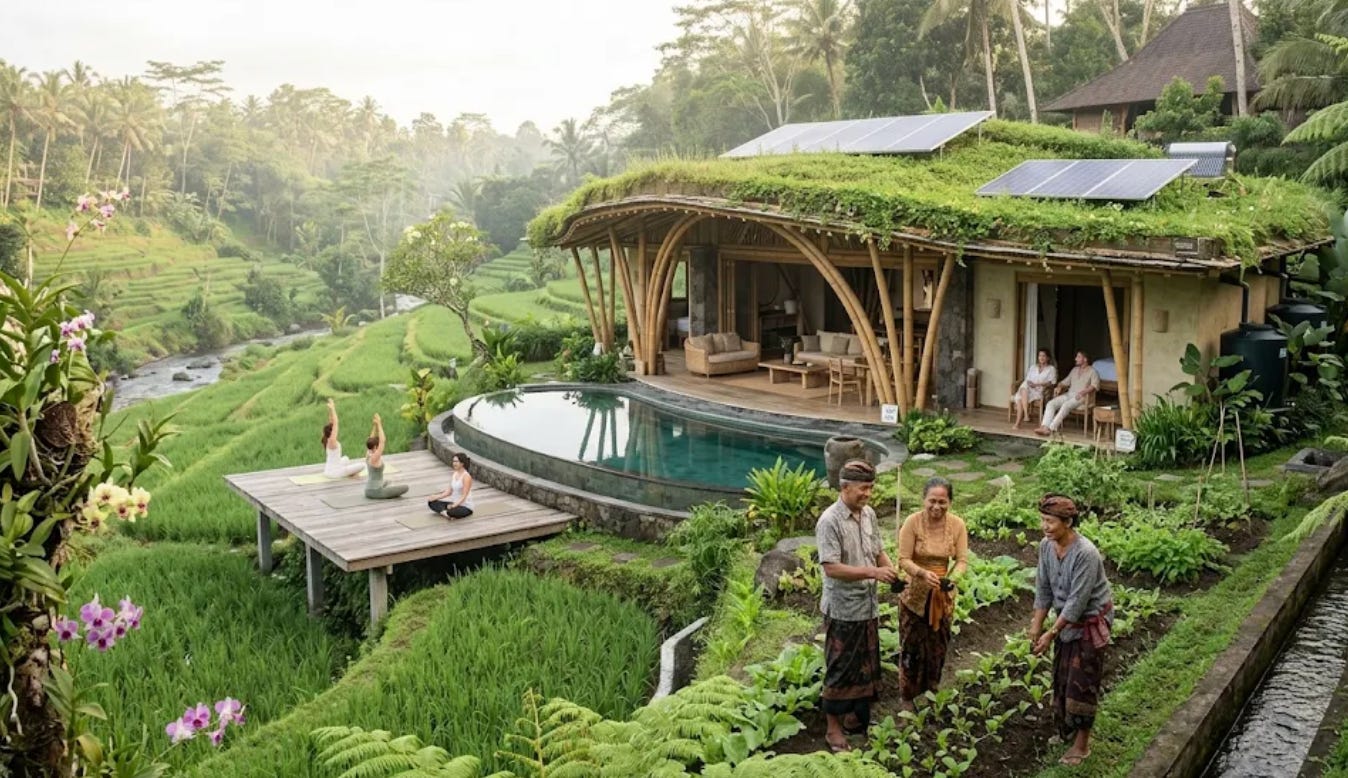
The Bali villa market has a new hierarchy, and it’s not what Instagram would have you believe. The properties commanding premium nightly rates and full occupancy aren’t the glossy generic infinity-pool estates that dominated five years ago. They’re the ones designed to feel part of Bali, built with natural materials, powered by renewable energy, and conceptually aligned with what guests actually want.
Eco-luxury is no longer a marketing angle. It’s the market fundamentals. And for property investors, it’s become genuinely the smarter play.
Here’s why, and where the real opportunities are in 2026.
The Shift: Why Guests Now Prefer Sustainable Villas
Something changed in 2024–2025. Guests — particularly the high-value segment staying 7–14 days, spending USD 200–400+ nightly — started choosing villas based on whether they felt aligned with Bali rather than whether they dominated Bali visually.
This preference shows up in booking patterns. Properties with natural material design (bamboo, volcanic stone, teak), renewable energy systems (solar panels, rainwater harvesting), and wellness-integrated spaces (yoga decks, organic gardens, meditation pavilions) achieve 75–85% occupancy. Generic “Instagram villas” (white minimalist, chlorinated pools, generic contemporary finishes) achieve 50–65%.
The financial impact is tangible: an eco-luxury villa achieves nightly rates of USD 250–400 for 250+ nights annually. A generic luxury villa achieves USD 180–280 for 200–230 nights. The eco villa generates 40–60% more annual revenue, same square footage, similar entry price.
Why? Part genuine preference for sustainability. Part desire for authenticity. Part recognition that a villa designed to breathe in Bali’s humidity and climate actually works better — less mold, less maintenance, less constant air conditioning. Part Instagram algorithm favoring natural-looking spaces over artificial aesthetics.
The trend is global, but Bali is where it’s most pronounced because the island is simultaneously dealing with environmental pressure and cultural responsibility.
What Actually Defines Eco-Luxury (Not Greenwashing)
Eco-luxury isn’t a vague sustainability claim. It’s specific material and system choices:
Building materials:
Bamboo (fast-growing, structurally sound, indigenous aesthetic)
Volcanic stone (locally sourced, thermal mass, authentic)
Reclaimed/recycled teak (antique character, environmental benefit)
Locally-harvested timber (reduces transport emissions, supports local economy)
Natural plasters and lime finishes (breathable, humidity-regulation)
Energy systems:
Solar panels (60–80% of energy self-generated in Bali’s climate)
Inverter systems for stable power (essential for tropical climate)
Energy-efficient lighting (LED throughout)
Passive cooling (cross-ventilation, open-air architecture reducing AC dependence)
Water systems:
Rainwater harvesting (Bali’s climate supports this; reduces mains water demand)
Greywater recycling (garden irrigation)
Native plantings requiring minimal water
Swimming pools using saltwater or mineral systems instead of chlorine
Wellness integration:
Yoga/meditation spaces (built-in demand from guests)
Organic gardens (both amenity and operational cost reduction)
Natural light prioritisation
Air quality management (plants, ventilation, non-toxic finishes)
A genuine eco-luxury property incorporates 6–8 of these features systematically, not just “solar panels and a garden.”
Where Eco-Luxury Works Best in Bali (2026)
Ubud: The birthplace of wellness tourism. Guests come expecting authenticity + sustainability. Eco-villas command premium rates (USD 200–350 nightly), full occupancy, long stays. Entry price: USD 150–350k. Yield: 10–14% gross, 8–12% net.
Sidemen: Emerging market (see the slow travel article). Guests actively seeking quiet + authentic + minimal development impact. Eco-design is table stakes here. Nightly rates: USD 120–220. Entry price: USD 100–200k. Yield: 10–13% gross, 8–11% net.
Tabanan: Hill country, rice farming region, genuinely quieter than Ubud. Eco-luxury developments expanding here (bamboo villas, wellness retreats). First-mover advantage opportunity. Nightly rates: USD 150–280. Entry price: USD 120–250k. Yield: 11–15% gross, 9–13% net (higher because development is earlier-stage).
Uluwatu (eco-focused sub-segment): Coastal cliffs, premium positioning. Eco-luxury villas here compete on both sustainability + location. Rates USD 300–500 nightly. Entry price: USD 400k+. Yield: 9–13% (lower percentage, but higher absolute return due to premium pricing).
Pererenan: Beachside village, growing wellness community. Eco-developers actively establishing here. Less crowded than Seminyak, better fundamentals than Canggu. Nightly rates: USD 180–320. Entry price: USD 150–300k. Yield: 11–15% gross, 9–13% net.
Case Study: Economics of Eco-Luxury vs Standard Luxury
Standard Luxury Villa (USD 350k):
Nightly rate: USD 250 average
Occupancy: 60% (220 nights)
Annual gross: USD 55,000
Management fee (28%): USD 15,400
Maintenance, repairs, AC costs: USD 10,000
Annual net to owner: USD 29,600
Net yield: 8.5%
Eco-Luxury Villa (USD 350k):
Nightly rate: USD 320 average (premium for sustainability + design)
Occupancy: 78% (285 nights)
Annual gross: USD 91,200
Management fee (28%): USD 25,536
Maintenance (lower due to passive systems): USD 6,000
Annual net to owner: USD 59,664
Net yield: 17%
The eco-luxury property generates 2x the net return, same capital investment. Note: Premium pricing depends on effective management and genuinely differentiated design. Generic “eco” labels without operational excellence won’t command premium rates.
Building an Eco-Luxury Villa From Scratch
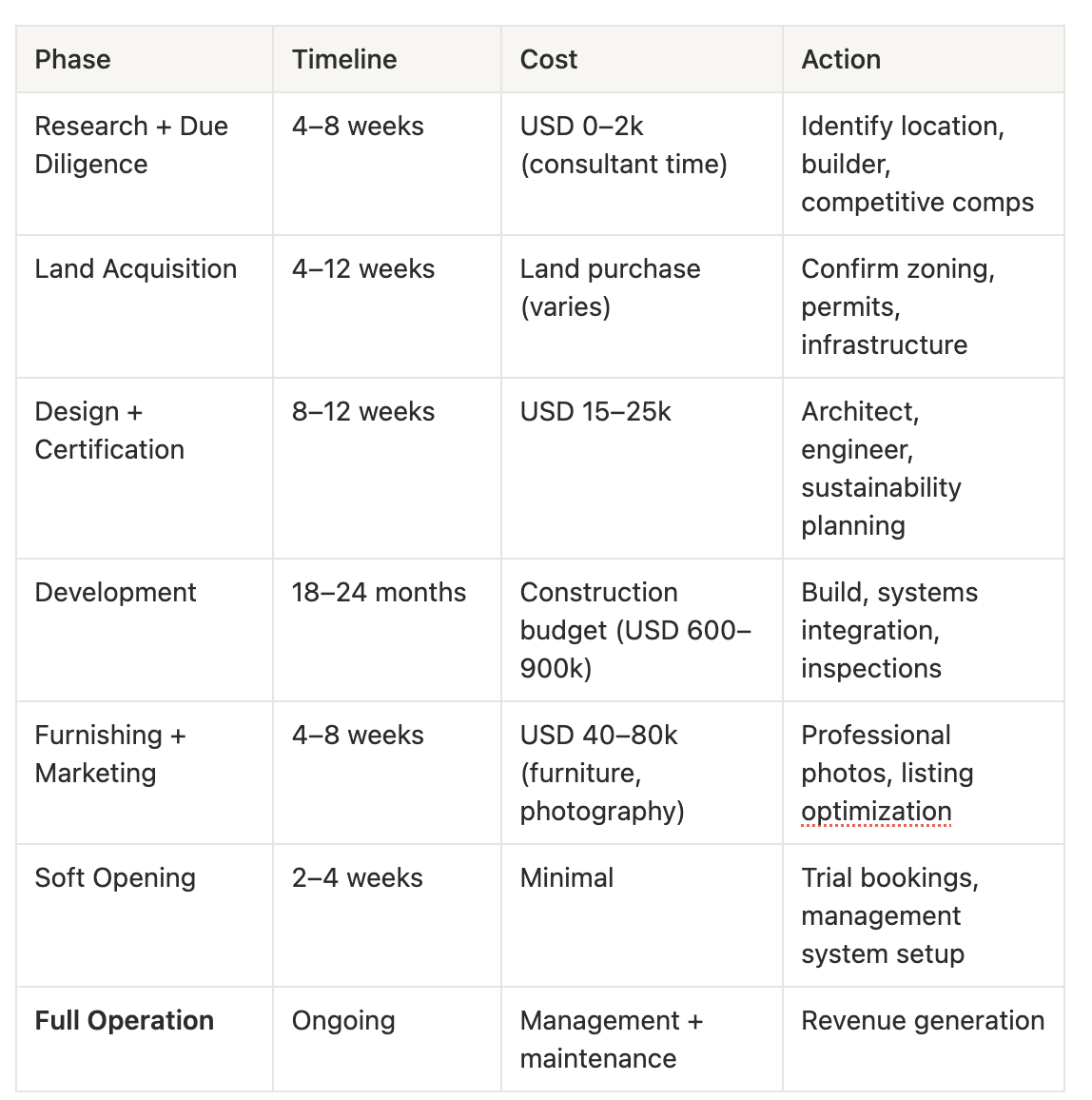
If you’re developing rather than buying finished, timeline and budget:
Timeline: 18–24 months (longer than standard because material sourcing is more specific, design integration is tighter)
Budget: USD 1,500–2,200 per square metre (higher than standard USD 1,000–1,400, because natural materials and renewable systems cost more upfront)
400 sqm villa: USD 600–880k development cost (finished, fully spec’d)
ROI timeline: Year 3–4 payback (higher initial cost, but higher occupancy and rates compress payback period)
Key contractor relationships: You need builders experienced with eco-materials and renewable systems. Generic Bali builders won’t prioritise these correctly. Budget USD 5–10k for hiring a project manager who understands both systems and local execution.
Permits/approvals: Zoning must allow short-term rental (confirm before acquiring land). Environmental permits increasingly required for water systems and landscaping. 2–4 weeks additional timeline.
Financing Eco-Development
Banks now understand eco-properties as lower-risk (they perform better). Some lenders offer preferential rates:
Standard villa development loan: 5.5–7% interest
Eco-villa development loan: 4.5–6.5% interest (if structured as sustainability-linked)
Savings: 100 basis points, approximately USD 10k over project life. Not huge, but real.
International development banks (IFC, some European institutions) offer green financing for certified eco-projects. Requires certification (cost: USD 5–10k), but accessible if you’re serious.
Certification & Credibility
Green Building Certification: LEED (US-based, internationally recognized), BREEAM (UK), or local Indonesian green building standards emerging. Cost: USD 5–15k, 3–6 month process.
Value: Certification is NOT required but adds 5–10% premium to nightly rates + occupancy, because guests recognize credibility. For a property generating USD 91k annually, 5% premium = USD 4,550 value creation.
Decision: If developing, pursue certification. If buying existing, prioritize certification in evaluation (certified properties command premium).
The Guest Profile: Who Actually Pays Premium for Eco?
High-intention seekers: wellness retreats, longevity-focused travelers, conscious consumers. Median age 35–55. Median income USD 150k+. Staying 7–14 days. Willing to pay premium for aligned values.
What converts them: storytelling around materials, energy systems, local impact. “This villa was built with bamboo from...” converts better than “This is a green villa.”
Where they find you: Instagram (prioritise visual design + material storytelling), wellness retreat listings, luxury travel sites that filter for sustainability, referrals from previous guests.
The Maintenance Reality: Why Eco-Systems Actually Reduce Costs
Solar systems: Zero fuel cost, predictable. Inverter maintenance: USD 200 annually. Lifespan: 20+ years.
Passive cooling: Eliminates 60–80% of AC costs (standard Bali villa: USD 3–5k annually on electricity, eco-villa: USD 1–2k). System lifespan: architectural (life of building), no maintenance.
Rainwater harvesting: Eliminates 40–60% of mains water costs. Maintenance: filter replacement USD 300/year. Self-pay in one month.
Natural materials: Bamboo requires periodic sealing (USD 500 every 2–3 years). Volcanic stone requires minimal upkeep. Lower maintenance overall than stucco/paint cycle of standard villas (paint refresh USD 5–8k every 5 years).
Result: Eco-villas cost 20–30% less to maintain than standard luxury villas, while generating 40–60% more revenue.
Challenges (The Honest Bit)
Upfront cost: Eco-materials and systems cost more initially. You’re betting on premium occupancy + rates to justify.
Contractor expertise: Not all Bali builders understand eco-systems. You need to vet carefully or hire project management.
Guest education: Some guests arrive with low expectations (thinking “eco” = rustic/uncomfortable). Clear pre-arrival communication and professional management matter.
Seasonal performance: Rainy season reduces occupancy slightly (some guests avoid). Dry season (May–October) occupancy approaches 85%+. Plan conservatively.
Regulatory shifts: Environmental regulations are tightening (this is good long-term, but creates near-term uncertainty in permitting).
A Complete Eco-Villa Investment Framework
Eco-luxury villas represent the intersection of genuine guest preference, operational efficiency, and investment fundamentals. They’re not niche anymore; they’re the market. For investors in 2026, a finished eco-luxury villa in a strong location (Ubud, Tabanan, Sidemen) with professional management achieves 12–18% net yields while serving a market that’s growing and genuinely committed to the properties.
The upfront research and certification cost is real, but the long-term economics are clear: eco-luxury outperforms standard luxury on every metric. In Bali’s maturing market, that difference is increasingly decisive.
FAQs
Q: Is eco-luxury just marketing, or do guests actually prefer it?
A: Booking data speaks clearly: eco-villas achieve 75–85% occupancy vs 50–65% for standard. Preference is real, not manufactured.
Q: Do I need certification to charge premium rates?
A: No, but certification adds credibility. Premium pricing is driven by design + experience, but certification justifies the premium to skeptics.
Q: Are eco-systems reliable in tropical climate?
A: Yes. Solar works excellently (Bali has 6–7 peak sun hours daily). Rainwater systems thrive. Bamboo performs well with proper maintenance. All systems are proven in Bali.
Q: Will guests expect the property to be 100% off-grid?
A: No. Hybrid systems (solar + grid backup) are standard. Guests understand that total off-grid sacrifice comfort. Hybrid hits the balance.
Q: Is the extra upfront cost worth it financially?
A: Yes. Higher occupancy + rates typically justify 15–20% construction cost premium within 3–5 years. Then you’re ahead indefinitely.
Q: How do I find an eco-focused builder?
A: Ask local architects, review completed projects, check references. Look for builders with prior eco-projects and material relationships (bamboo suppliers, solar installers).
Q: Can I retrofit an existing villa to be eco-luxury?
A: Partially. Solar can be added (USD 30–50k). Landscaping/gardens can be redesigned. Natural finishes can be incorporated. But structural/material changes are expensive. Better to buy eco already-built.
Q: What if environmental regulations change mid-project?
A: Risk is real but manageable. Green building is directionally aligned with future regulation (you’re ahead, not behind). Stay informed through local developer networks.
Q: Do eco-villas hold value better for resale?
A: Yes. Buyer demand is increasing. Properties with proven eco-performance and operational track record command premium multiples.
⚠️ Important disclaimer — please read carefully
This article reflects my personal experience and independent research only. It is not legal, immigration, financial, tax, business, medical, or professional advice of any kind, and should not be relied on as such.
Indonesian laws, visa rules, property regulations, tax requirements, and safety conditions change frequently and vary depending on your nationality, circumstances, and timing. Mistakes in these areas can carry serious consequences — including financial loss, deportation, legal liability, or harm to your health and safety.
Before making any decision based on this article, you must consult a qualified, regulated professional appropriate to your situation — such as an Indonesian immigration agent, lawyer, notary (PPAT), accountant, doctor, or licensed operator. I accept no responsibility for any decisions or actions you take based on what you read here.
Some links may be affiliate links, meaning I may earn a small commission at no extra cost to you. Sponsored content is clearly labelled. Full Terms of Service and Privacy Policy.