
Moving Your Body in Paradise
Part4 of 6: Traditional Healing and Spiritual Practices

QUICK SUMMARY
Bali’s coastline offers perfect waves for all surfing levels
Fitness bootcamps combine intense workouts with cultural experiences
Eco-friendly gyms and outdoor spaces make exercise feel less like work
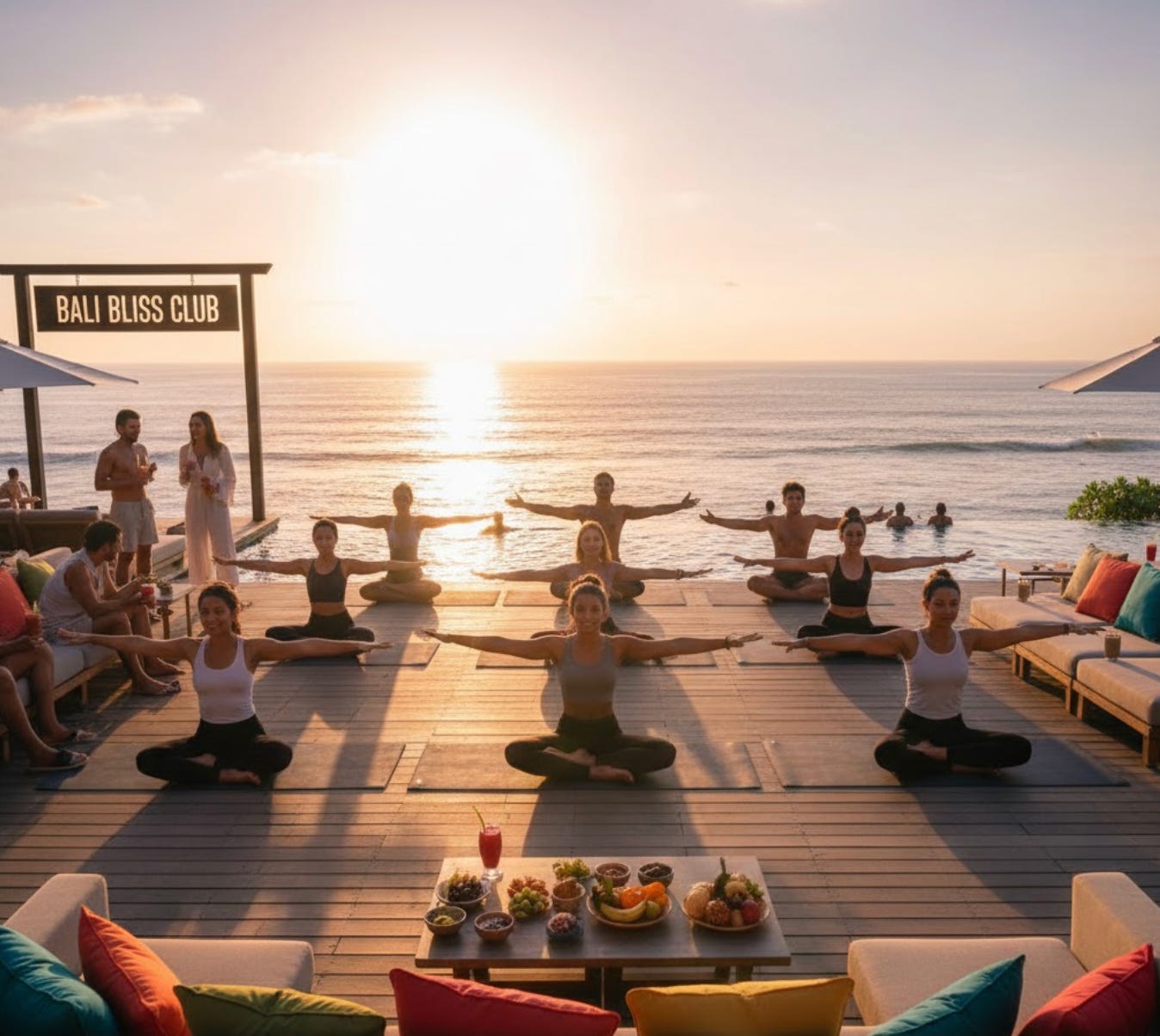
Beach clubs blend fitness with social wellness experiences
The key is finding activities that energise rather than exhaust you
Let’s talk about getting sweaty.
I know, I know. You came to Bali for wellness and healing, not to beast yourself in a gym. But here’s the thing about proper wellness: your body needs to move. Not in a punishing, must-earn-your-rest kind of way. In a joyful, this-is-what-bodies-are-designed-for kind of way.
And Bali offers something quite special. Places where working out doesn’t feel like work because you’re doing it on a beach at sunrise, or in a jungle gym with monkeys chattering overhead, or in the ocean catching waves. Physical activity that feeds your soul while strengthening your body. That’s what we’re after.
Surfing: The Ultimate Moving Meditation
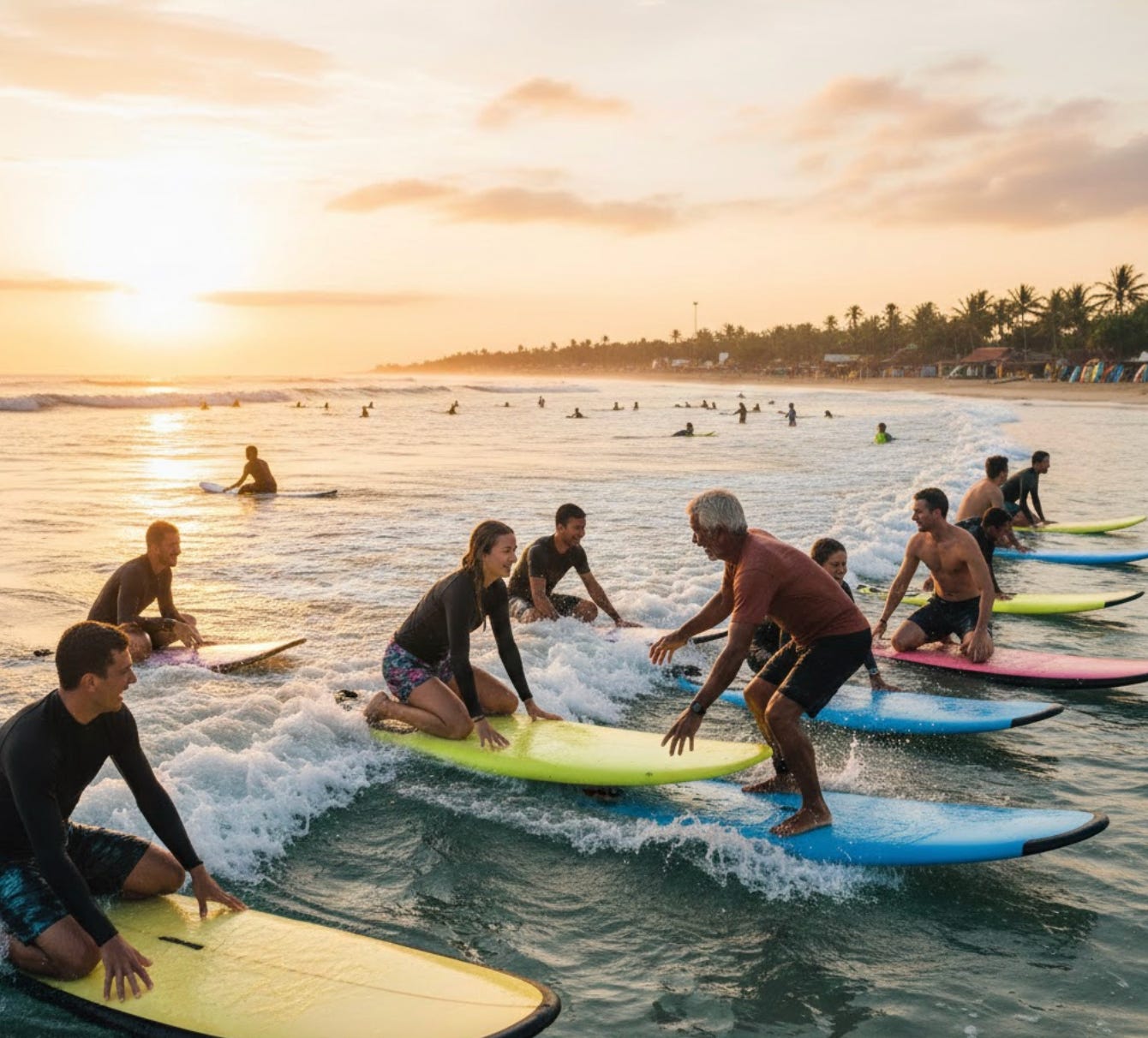
If you’ve never surfed, this might sound intimidating. Images of massive waves and expert surfers doing aerial tricks probably come to mind.
Forget all that. Surfing in Bali can be gentle, accessible, and ridiculously fun for complete beginners.
Why Surfing Is Perfect for Wellness
Surfing forces you to be completely present. When you’re trying to catch a wave, your mind isn’t running through work emails or life problems. You’re focused on timing, positioning, balance. It’s meditation disguised as sport.
The physical benefits are brilliant too. Core strength, shoulder and back muscles, balance, cardiovascular fitness. You’re getting a full-body workout without the tedious repetition of a gym.
Plus, you’re in the ocean. There’s something inherently healing about salt water and waves. Many surfers describe feeling cleansed, both physically and mentally, after sessions.
Best Spots for Beginners
Kuta Beach gets a bad reputation for being touristy and crowded, but it’s genuinely excellent for learning. The beach breaks are forgiving, the waves are gentle, and surf schools line the beach offering lessons and board rentals.
Canggu has several breaks suitable for beginners. Old Man’s is popular with learners. Batu Bolong can get crowded but offers manageable waves. Echo Beach is a bit more challenging but still accessible.
Seminyak offers longer, gentler waves than Kuta. It’s less chaotic whilst still having plenty of surf schools and rental shops.
Balangan Beach in the south has beautiful scenery and good beginner waves when conditions are right. Less developed than the main tourist areas.
The key is starting small. Don’t try to be a hero. Stick to foam boards and gentle waves until you’ve got the basics sorted.
Surf Schools and Lessons
Pretty much every surf beach in Bali has schools offering lessons. Expect to pay around £25-40 for a two-hour group lesson, including board rental.
Sundays Beach Club in Uluwatu combines surf lessons with a gorgeous beach club setting. After your lesson, you can use the pool, get healthy food, and generally make a day of it.
Rip Curl School of Surf in Kuta is well-established with experienced instructors. They’re good at working with nervous beginners.
Mojosurf offers surf camps combining lessons with accommodation, meals, and social activities. Good if you want an all-in-one package.
Private lessons cost more (£45-60) but give you undivided attention and faster progress. Consider splitting the cost with a friend for semi-private instruction.
Beyond Lessons: Surf as Lifestyle
Once you’ve got basic skills, surfing can become a regular part of your Bali wellness routine. Many people find themselves naturally falling into a rhythm. Up at sunrise, quick surf session, healthy breakfast, then the rest of your day. It sets a positive tone and gets endorphins flowing early.
The surf community in Bali is welcoming. You’ll make friends in the water, at beach cafés, and at local breaks. There’s a particular camaraderie among surfers that crosses nationalities and backgrounds. You don’t need to get good to enjoy it. Some people surf for years and remain cheerfully mediocre. The point isn’t performance. It’s the experience.
Fitness Bootcamps: Transformation in Paradise
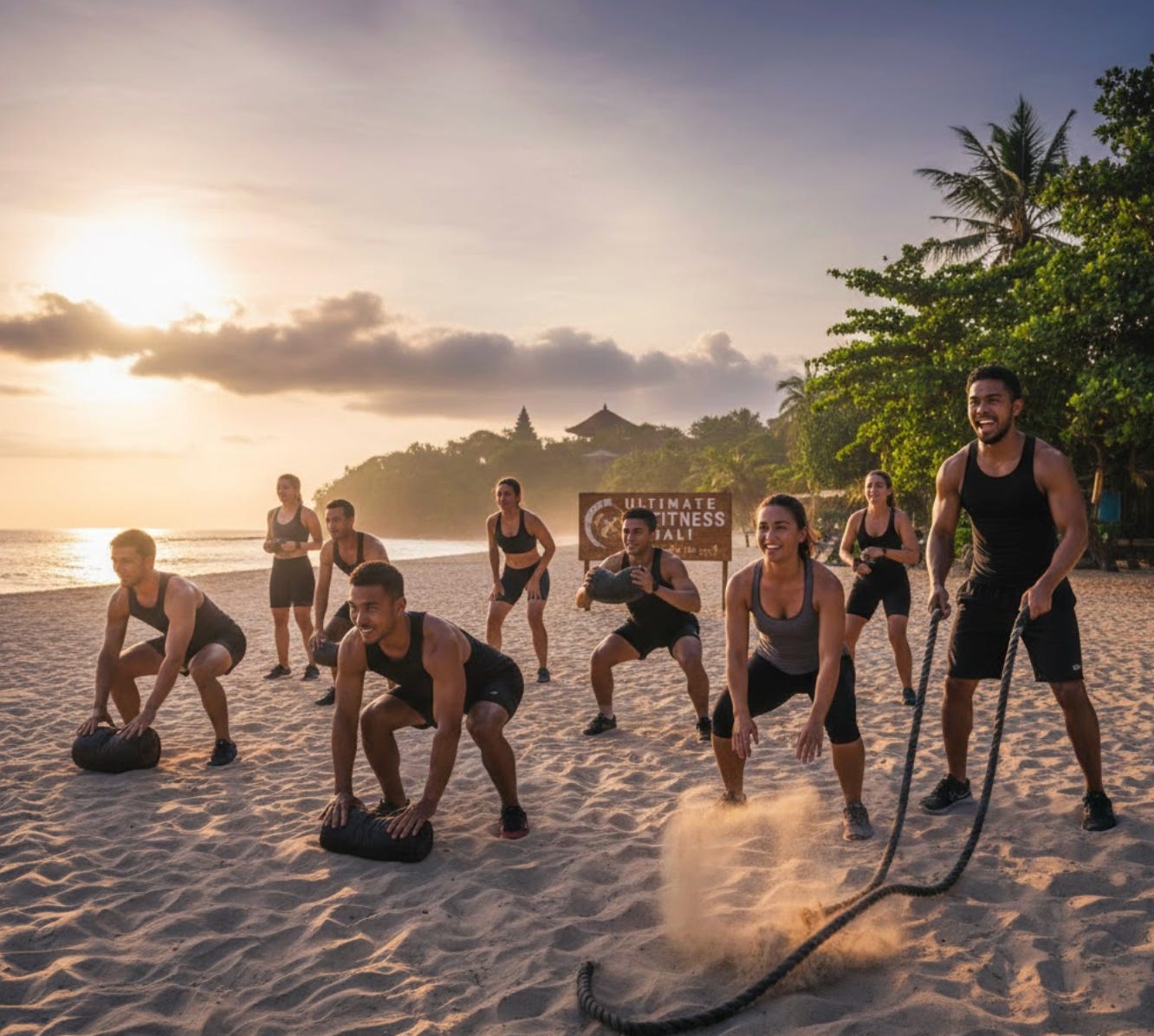
Right, this is for people who want to properly challenge themselves physically whilst taking advantage of everything Bali offers. Fitness bootcamps here aren’t like the grim affairs you might imagine. They combine serious training with cultural experiences, healthy food, and recovery practices.
The Ultimate Fitness Bali Bootcamp
Based in Canggu, this programme has built a strong reputation for delivering results whilst keeping the experience enjoyable.
What you get:
Daily training sessions mixing HIIT, strength work, functional fitness, and conditioning. These aren’t casual workouts. You’ll work hard and be properly tired afterwards.
Yoga and mobility classes to balance the intensity and prevent injury.
Nutritious meals designed to fuel your training and support recovery. They understand that undereating sabotages fitness goals.
Surf lessons if you want them, because why not add another physical challenge?
Cultural excursions to temples, markets, and local experiences. You’re in Bali, not a gym in Milton Keynes.
The community aspect is huge. You’re training alongside others who’ve come for similar reasons. Bonds form quickly when you’re suffering through burpees together.
Programmes typically run one to four weeks. Costs vary but expect £1,200-2,000 for a two-week programme including accommodation, meals, and all activities.
S2S CrossFit
We covered this in the Canggu fitness series, but it bears repeating. S2S offers drop-in classes and short-term programmes for visitors.
The programming is solid. The community is welcoming. The coaching is good. And the beach is five minutes away for post-workout swims.
They understand that wellness tourists have different needs than competitive athletes. Classes are challenging but scaled appropriately.
Finding the Right Level
Be honest about your current fitness level when choosing programmes.
Beginner-friendly bootcamps focus on building foundation, teaching proper form, and making fitness accessible. You’ll work hard but not be thrown into advanced movements.
Intermediate programmes assume you’ve got basic fitness and can handle more intensity. Expect challenging workouts that push your limits without completely destroying you.
Advanced or competition-focused camps are genuinely hardcore. Don’t sign up for these unless you’re already seriously fit and want to be pushed to your absolute limits.
Most quality programmes assess you at the start and scale workouts to your ability. But it’s still worth being realistic about where you’re starting from.
Eco-Friendly Fitness: Training in Nature
One of Bali’s greatest assets is its incredible natural environment. Several spots have capitalised on this to create fitness experiences that feel more like adventures than exercise.
The Jungle Gym at Blue Earth Village
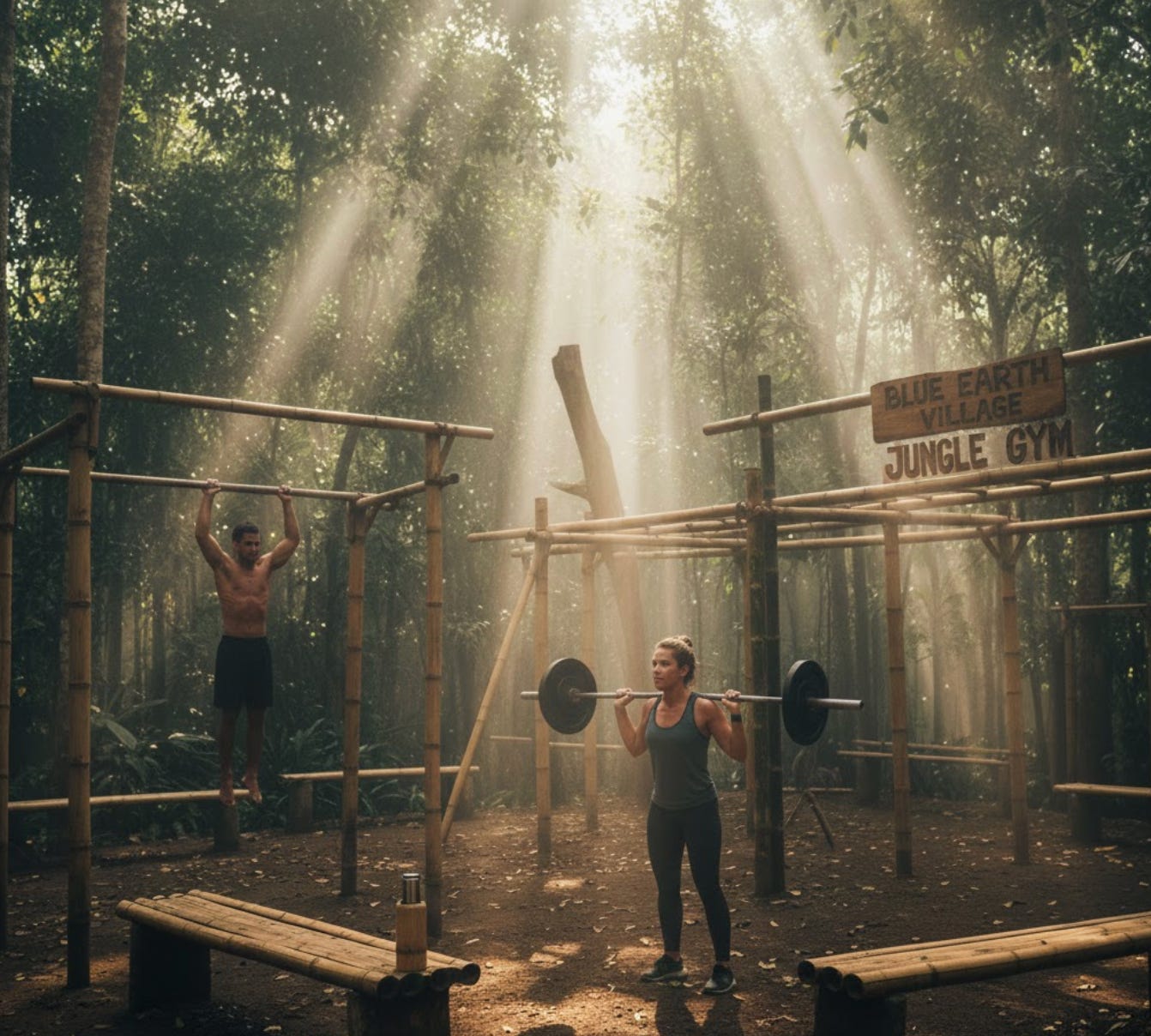
This is probably Bali’s most Instagram-famous fitness spot. An open-air gym built entirely from bamboo and natural materials, set in a jungle clearing. It’s as beautiful as it looks in photos. But it’s also a fully functional gym with proper equipment. Just made from bamboo rather than metal.
You’ll find everything needed for a complete workout: pull-up bars, parallel bars, weights made from bamboo and concrete, squat racks, and even a bamboo barbell.
The setting transforms the experience. You’re working out surrounded by towering trees, with jungle sounds replacing gym music. It feels primal and deeply satisfying.
Drop-in sessions cost around £10-12. They also offer classes if you want instruction.
Be prepared: it’s humid in the jungle. You will sweat more than you’ve ever sweated in your life. Bring plenty of water and embrace it.
Beach Workouts
Several beach clubs and fitness groups offer outdoor training on Bali’s beaches.
FINNS Beach Club in Canggu has regular fitness classes on the sand. Imagine doing HIIT intervals with waves crashing nearby and the sun rising over the ocean.
Potato Head Beach Club occasionally hosts wellness events combining fitness with music and community.
Independent trainers often run bootcamps on beaches, particularly in Seminyak and Sanur. These are usually advertised on social media or community notice boards.
Beach training is genuinely challenging. Sand provides resistance and instability that makes even simple movements harder. Your core works overtime just maintaining balance. It’s also more forgiving on joints than hard surfaces. And the ocean right there for post-workout swimming.
Hiking and Trail Running

Bali’s terrain offers excellent opportunities for hiking and trail running.
Mount Batur is the classic sunrise hike. It’s touristy but spectacular. The climb takes about two hours, and you’ll be rewarded with views over the island as the sun rises.
Campuhan Ridge Walk in Ubud is shorter and easier but still beautiful. Perfect for morning walks or gentle jogs.
West Bali National Park has hiking trails through diverse landscapes. You’ll need a guide, but it’s worth it for the pristine nature and potential wildlife sightings.
Rice terrace trails around Sidemen and Jatiluwih offer relatively flat walking or running through stunning scenery.
Trail running has a growing community in Bali. Groups meet for morning runs, exploring new routes and combining fitness with discovery.
Balancing Intensity with Recovery
Here’s something important that fitness culture often gets wrong: rest is productive.
When you’re training hard, your body needs recovery time to adapt and strengthen. Without adequate rest, you just break yourself down without building back up.
Bali’s wellness culture understands this beautifully. Most bootcamps and fitness programmes build in recovery practices.
Yoga for athletes focuses on flexibility, mobility, and active recovery rather than strength or endurance.
Massage and bodywork help muscles recover faster and prevent injury. Regular massage isn’t a luxury when you’re training hard. It’s maintenance.
Ice baths and sauna improve recovery and reduce inflammation. Many high-end gyms and beach clubs offer these facilities.
Swimming provides active recovery that’s gentle on joints whilst keeping you moving.
Simply resting is valid too. Lying by a pool, reading a book, doing absolutely nothing physical. Your body is working hard to repair and strengthen. Support that process.
Fitness as Social Wellness
One unexpected benefit of Bali’s fitness scene is the social aspect.
Group classes, bootcamps, and surf sessions naturally create community. You’re doing challenging things alongside others, which bonds people quickly.
Many friendships start in the middle of a workout. Mutual suffering brings people together in a particular way. You’ll end up grabbing post-workout smoothies, exploring the island together, maybe even becoming actual friends beyond the gym.
This social aspect is wellness too. Humans are tribal creatures. We need connection, shared experiences, and a sense of belonging. Fitness communities provide all of that.
So even if you’re naturally introverted or travelling solo, consider joining group activities. The connections you make might end up being as valuable as the physical benefits.
Listening to Your Body
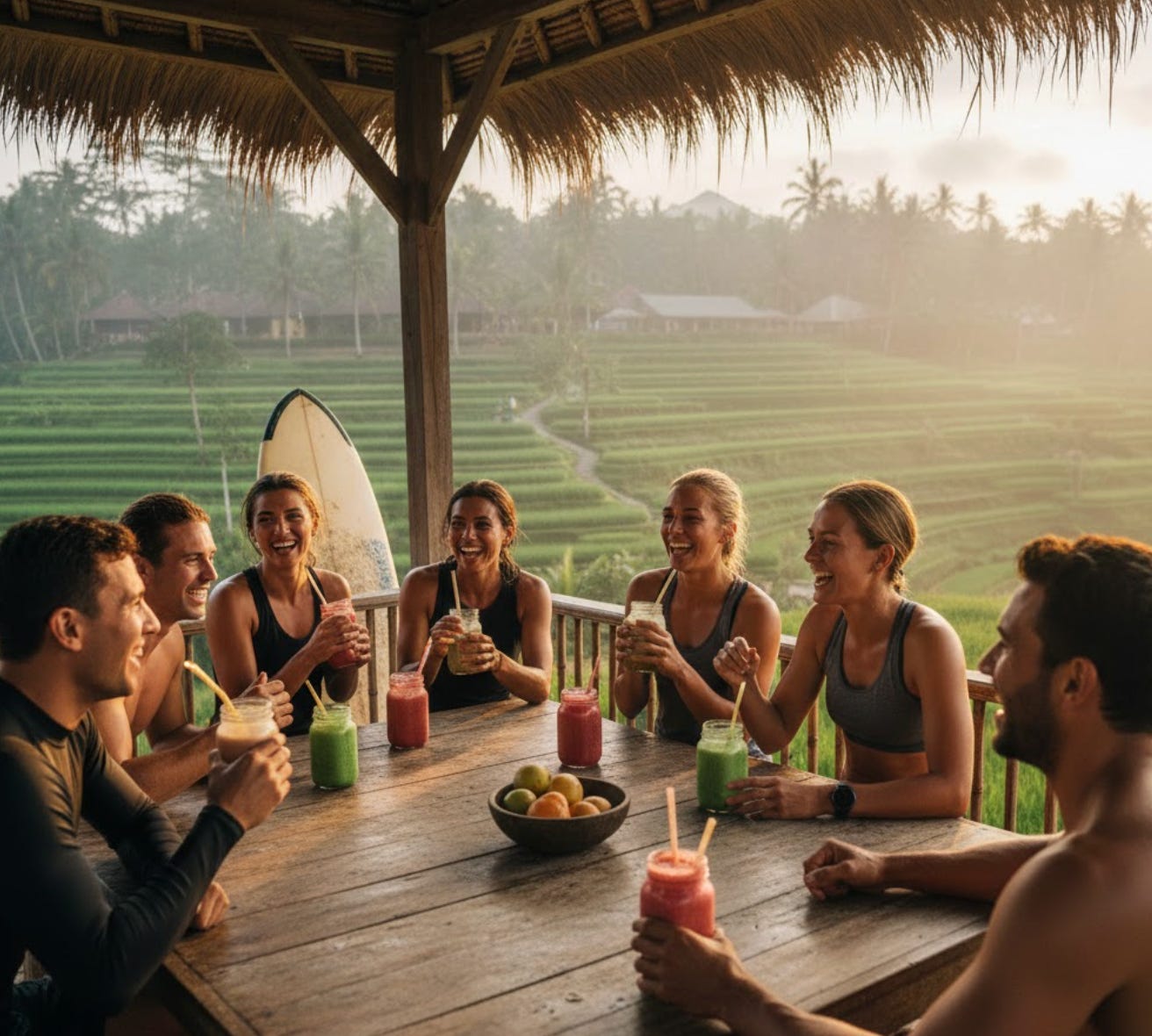
All this physical activity sounds brilliant in theory. But your body might have other ideas, especially if you’re dealing with the heat and humidity whilst still adjusting to time zones.
Start slower than you think you need to. Your normal workout intensity back home will feel harder in tropical heat. Scale back initially and build up as you acclimatise.
Hydrate obsessively. You’re sweating more than usual. Drink more water than seems reasonable. Add electrolytes if you’re training hard.
Watch for heat exhaustion. Dizziness, nausea, confusion, or cramping mean you need to stop, get cool, and rehydrate immediately.
Don’t train through pain. Minor discomfort during exercise is normal. Sharp pain or pain that lingers afterwards isn’t. Rest and get it checked if needed.
Sleep matters enormously. You can’t out-train bad sleep. Prioritise rest, especially if you’re doing intense workouts.
Nutrition fuels performance. Don’t try to combine intense training with restrictive eating. Your body needs fuel to perform and recover.
The goal is sustainable wellness, not pushing yourself into injury or burnout. Trust your body’s signals.
What’s your preferred way to move? Are you drawn to surfing, structured workouts, outdoor adventures, or something else? And what’s held you back from being more active in the past?
I’d love to hear what physical activities excite or intimidate you.
Read Part 3: Traditional Healing
Next week: Part 5 - Nourishing Your Body
We’re exploring Bali’s incredible food scene. Healthy eating destinations that actually taste good, organic farm experiences, spa treatments, detox programmes, and how to fuel your body for transformation. Plus, the practical stuff about maintaining healthy eating habits.