
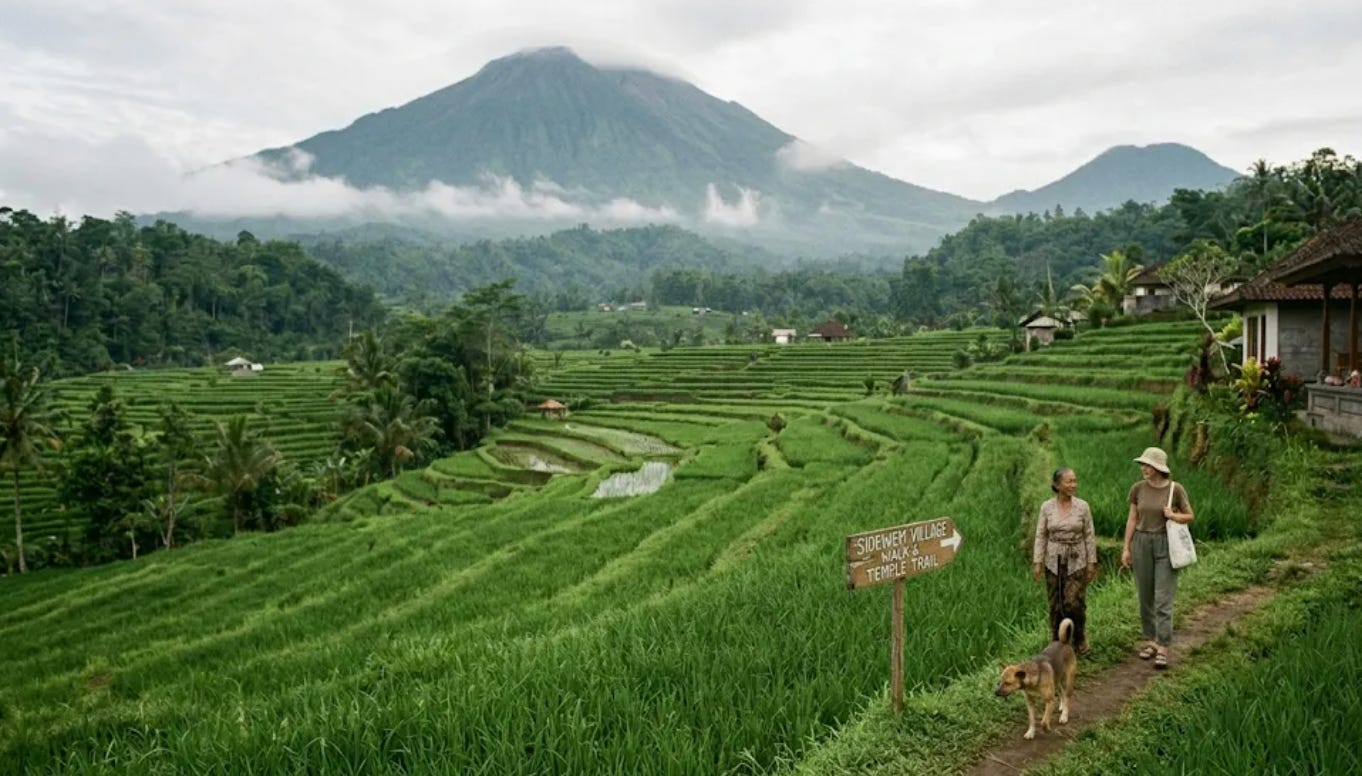
If you’ve spent any time in Bali recently, you know exactly what I mean when I say the island is changing. The Instagram-ready spots that once felt like discovery now feel like a queue. And somewhere between the third reels video of Tegallalang Rice Terrace and the hundredth golden-hour mirror selfie in Ubud, something shifted in what people actually want from Bali.
I first noticed it when friends stopped telling me where they were staying and started telling me where they were slowing down. Sidemen became the name they kept mentioning. Then Seraya. Then Amed — this entire stretch of East Bali that most guidebooks skip over entirely.
For 2026, slow travel isn’t just a trend. It’s what’s left when everyone else has left. And if you’re tired of the crowded circuit, this is the Bali that actually feels like Bali.
What Slow Travel Actually Means in Bali (And Why East Bali Gets It Right)
Slow travel gets used for everything these days — from “I spent three hours at a café instead of two” to genuinely settling somewhere. But in Bali’s context, it means something specific: choosing depth over distance, staying longer than four days, eating where locals eat without checking Instagram for the angle first.
East Bali — Karangasem, really, if you want to be precise about it — is where slow travel happens naturally because there’s nothing forcing you to rush. No cultural expectation to tick boxes. No Seminyak nightlife starting at 9pm. No someone else’s idea of what a Bali experience should look like.
The truth is simpler: East Bali is what South Bali looked like thirty years ago. Sidemen especially. I’ve heard it called “Ubud before the crowds” enough times that I started asking what people meant. They meant quiet. They meant waking up to actual silence instead of motorbike honking. They meant a waiter who knows your name because you ate at his family’s warung four times that week, not because you followed them on TikTok.
Sidemen: The Ubud Alternative That Actually Works
If you tried Ubud in 2026 and found it exhausting, Sidemen is the correction. Same rice terraces. Same spiritual centre. Same access to proper Balinese culture. Different everything else.
Sidemen is tucked into Karangasem, about 1.5–2.5 hours inland from coastal towns like Candidasa. The drive winds through actual villages — not tourist-facing performance villages, actual places where people live and farm and have conversations you’re not supposed to interrupt for photos. The landscape is dramatic in the way only rice terraces can be, but because there are fewer tourists, the terraces feel like part of someone’s actual working day rather than a backdrop.
The accommodation options run from homestays (family-run guesthouses where someone’s mother will cook your breakfast for 80,000 IDR) to established retreats that have quietly built reputation over years without needing to shout about it on Instagram. The higher-end places — I’m thinking around USD 70–100 per night — often include yoga spaces and wellness programming, but they don’t lead with that. They lead with quiet.
One thing Sidemen does better than Ubud: it hasn’t decided to be a destination for influencers. This matters more than it sounds. It means cafés have menus in Balinese first and English second. It means you’ll have conversations with people actually passing through rather than people waiting for their content moment.
Access to hiking is excellent — trails to temples, trails through farming villages, trails that don’t end in a selfie stick queue. I’d recommend arriving with a basic sense of direction and a willingness to ask locals; the footpaths don’t always follow what Google thinks they should.
Seraya and the Lighthouse TikTok Actually Got Right
Seraya is in East Bali’s far corner, the least-developed region of the island. It’s the kind of place where roads narrow considerably and you understand why motorbike culture dominates — a car would genuinely struggle.
The draw is the lighthouse. Bukit Mencol — went viral on TikTok because the view is actually extraordinary: dramatic cliffs, blue ocean, the lighthouse sitting there like a punctuation mark at the end of the island. The thing about places that go viral on TikTok is that most of them don’t warrant the hype. This one does.
What makes Seraya work for slow travel is that the infrastructure to stay there is minimal, which filters for the right people. You can’t drop in for an afternoon and make content; you have to commit to actually being there. Most accommodation is budget guesthouses run by local families, usually under USD 20 per night, often with proper local home cooking available if you ask. The nearest “proper town” is Candidasa (45 minutes south), which has restaurants and supplies but still feels genuinely local.
The landscape is sculptural — volcanic formations, terraced farming that follows ancient patterns, ocean views that honestly never get boring. The roads are rough. Mobile signal can be patchy. Internet is functional but not reliable. This is the feature, not the bug.
I’d recommend a motorbike if you’re comfortable with them — car rental feels excessive. And I’d suggest at least three days; Seraya rewards patience. By day two, you’ll have a favorite warung. By day three, the owner’s kids will start practising their English with you.
Amed: The Beach Town Where Time Moves Differently
Amed sits on Bali’s northeast coast — technically still Karangasem. It’s a fishing village that tourism crept into without overwhelming it. The reef is excellent (some of the best snorkelling in Bali happens directly from the beach, which is rare), the community is tight-knit and welcoming, and there’s enough structure to feel secure without enough tourism to feel crowded.
Accommodation ranges from ultra-budget homestays (genuinely, rooms for USD 8–12 per night with fans and cold water, completely legitimate, run by local families) to mid-range seaside villas (USD 40–70 per night, often with kitchens, sitting spaces, proper beds). There’s a growing wellness segment — yoga decks, health food cafés — but it hasn’t swallowed the town.
What Amed has that Sidemen and Seraya don’t quite have: functioning beach culture. You can swim. You can sit with a drink and watch fishing boats come in. You can snorkel before breakfast. This appeals to people who want slow living but don’t want to give up water entirely.
The town is strung along the coast road — not compact, exactly, but walkable in sections. A proper motorbike or scooter genuinely useful here. Internet is stable (better than Seraya), mobile signal is good, and there are actual restaurants beyond warung food (though the warung food is better).
The Bigger Picture: Why East Bali Matters in 2026
Here’s what’s actually happening: South Bali has matured past its usefulness for slow travelers. It’s not that South Bali is bad — it’s that it’s fully optimised for a different experience: quick beach trips, nightlife, Instagram content, villa rentals. Completely legitimate. Just not slow travel.
East Bali is where the actual shift is visible. International flights still land in South Bali, so people have to consciously choose to drive two hours northeast. That choice filters for genuine intent. The infrastructure — homestays, quiet cafés, family-run restaurants — assumes you’re staying longer than a weekend. The landscape and culture aren’t performance; they’re lived.
For 2026 specifically: tourism numbers in East Bali are rising, but slowly. The road infrastructure is improving (there’s genuine talk of better connectivity from North Bali airport opening in 2027), but hasn’t yet swallowed the character of these places. This window — where things are accessible but not yet overwhelmed — probably closes within 3–5 years. Not because the areas will become bad, but because they’ll become intentional tourism destinations rather than actual towns you happen to stay in.
How to Actually Plan an East Bali Slow Travel Trip
Where to start: Pick one place. Sidemen if you want wellness + mountains. Amed if you want ocean. Seraya if you want isolation. Trying to do all three in a week defeats the point.
How long: Minimum five days. Three if you absolutely must, but you’ll still be unpacking when it’s time to leave. A week is ideal. Two weeks is where you actually stop performing for yourself.
Getting there: Rent a motorbike if you’re comfortable (safest when you’re not rushing), or hire a driver. Ride-share doesn’t really exist out here. Driving yourself gives you stop-where-you-want freedom; a driver gives you someone who actually knows the small roads and can take you to the warung that doesn’t have a name.
Cost: Genuinely budget USD 25–40 per day for accommodation, USD 5–10 per meal at local warungs, USD 10–15 per day for transport. Dial up the comfort and it rises to USD 60–80 per night, but the experience doesn’t improve proportionally. The magic is in the pace, not the thread count.
What to do: Walk. Talk to people. Eat where you see locals eating. Take a temple blessing if one’s offered. Learn three Balinese words (this matters more than you’d think; it changes how people interact with you). Sit longer than feels necessary. Read a book. Nap without scheduling it.
Logistics: Take out enough cash in Ubud or South Bali — ATMs exist in Amed and Candidasa, but they’re not everywhere else. Bring some US dollars in small denominations (USD 1–5 notes); some small warungs don’t give great rates for large bills. Download offline maps; Google will lead you astray sometimes. Tell someone where you’re staying and check in occasionally; it’s not dangerous, but it’s respectful.
The Honest Bit: What Slow Travel Asks of You
It’s not all golden. Slow travel in East Bali means: Internet that works intermittently. Bedrooms that are genuinely basic. Bathroom situations that involve squatting in some homestays (completely normal and hygienic, but requires adjustment). Noise from roosters at 5am (this is everywhere in Bali, not specific to East, but worth noting). Food that’s repetitive because the local food is genuinely limited to what the region actually produces.
The social pace is slower. Some people find this meditative. Some people find it lonely. Most people find it both.
The landscape is less Instagram-optimised. Sidemen rice terraces are as dramatic as Tegallalang, but the angles are different. Seraya doesn’t have the polished boutique cafés of Seminyak. Amed’s beach isn’t the white-sand swimming beach of Nusa Dua. This is, honestly, the entire point. But it’s worth knowing you’re choosing authenticity over aesthetic.
A Week-Long East Bali Slow Travel Itinerary
Day 1: Arrive in Sidemen. Settle. Walk the main paths. Find your warung. Rest.
Day 2: Sunrise hike (most temples in Sidemen welcome visitors before 7am, before the heat). Explore rice terraces on foot. Second breakfast. Long lunch. Afternoon nap. Dinner somewhere different from yesterday.
Day 3: Day trip to Tenpakulur waterfall (small, genuine, requires a local guide, worth it) or temple explorations. Slow return. Evening yoga if there’s a class at your accommodation. Reflective journal-time vibes.
Day 4: Move to Amed or Seraya (or extend Sidemen, honestly). Motorbike journey is part of the experience.
Day 5–6: Water-based slow travel — snorkelling in Amed, or lighthouse journey and cliff-sitting in Seraya.
Day 7: Return slowly. Stop in Candidasa if you want (genuine beach town, less-known, solid restaurants). Debrief time. Prepare for re-entry into busier Bali.
Slow travel in Bali isn’t about finding a new Instagram aesthetic. It’s about remembering that a place can contain you — that you don’t have to contain it for content. East Bali, in 2026, is still a place where that’s actually possible.
Sidemen, Seraya, Amed: they’re not undiscovered (slow travel Instagram has found them). But they’re underdeveloped as tourism products, which means they still feel like places rather than attractions. That difference will matter more and more as South Bali continues to mature.
If you’ve tried Bali before and found it exhausting, this is worth knowing. The island hasn’t stopped being extraordinary. It’s just that the extraordinary has moved east.
FAQs
Q: Is East Bali safe?
A: Yes. Safer, honestly, than South Bali in terms of petty theft and scams, because there’s less tourist infrastructure for crime to optimise around. That said, basic sense: don’t leave valuables unattended, don’t ride motorbikes at night if you’re not experienced, stay on marked paths for hikes. Use the same caution you’d use in any place that’s outside major tourist zones.
Q: Is the internet really that bad?
A: In Seraya, yes. In Sidemen, it’s workable but unreliable during peak hours. In Amed, it’s fine. If you need reliable fast internet, Amed is your base. If you’re actually on proper holiday (not work-holiday), the limitation is feature, not bug.
Q: Can I do slow travel on a budget?
A: Absolutely. USD 30–40 per day is completely realistic if you’re staying in homestays and eating local. The trade-off isn’t money for luxury; it’s money for comfort. Go budget and you get authenticity. Go mid-range and you get comfort while maintaining authenticity. You don’t need high-end to experience this correctly.
Q: How do I get around without a motorbike?
A: Hire a driver for days you need to move; costs USD 50–70 per day for a car and driver. Walk everywhere else. Some places like Sidemen are genuinely walkable; others require transport. A driver also means no one has to navigate unfamiliar roads, which is honestly the best version of motorbike anxiety solved.
Q: What’s the best time of year?
A: April through October (dry season). Rainy season (November–March) is humid, but fewer tourists and lower prices. East Bali’s weather is slightly different from South Bali — check local forecasts. East Bali actually gets less rain than South due to geography, which is one advantage.
Q: Will I get bored staying in one place for that long?
A: Probably not, but in a way that surprises you. The boredom you think will happen (too-slow time, nothing to do) becomes groundedness. The actual challenge is re-entry: returning to normal pace feels shockingly jarring.
Q: Is this actually authentic, or am I just a tourist being sold “authenticity”?
A: Bit of both. You’re still a tourist; the act of showing up as a visitor is itself a form of tourism. But unlike South Bali’s fully optimised tourism product, East Bali still prioritises living over performing. The difference is real. The fact that it’s becoming a destination doesn’t erase that.
A note from Annie
Destined for Bali shares my personal experiences, opinions, and independent research. Everything I write reflects what I’ve found to be true at the time of publishing — but Bali changes constantly, and what works for me may not work for you. Always do your own research and seek qualified professional advice before making decisions about travel, visas, property, business, health, or anything else that matters. Some links in my posts are affiliate links, meaning I may earn a small commission at no extra cost to you. Sponsored content is always clearly labelled. Read the full Terms and Privacy Policy.