
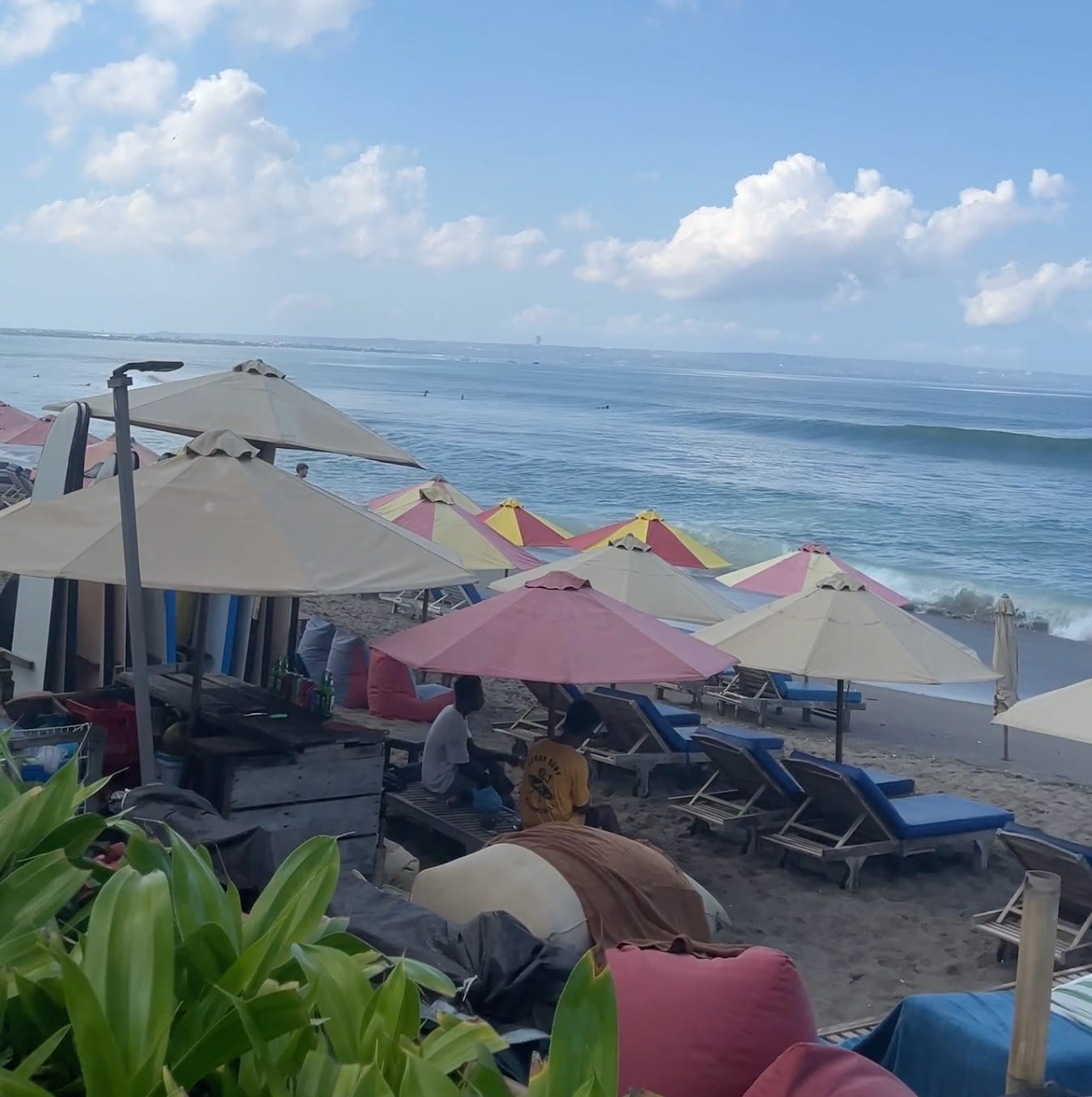
You’re scrolling on TikTok at 11 PM on a Tuesday. Your job is soul-crushing, your rent is astronomical, and you just watched someone in a flowing white linen shirt sip a coconut on a beach whilst casually mentioning they live in Bali for “just £800 a month.” Your heart does that thing. That specific flutter that says: I could do that. I could leave. I could be free.
Here’s the thing I need to tell you: it’s complicated.
Bali is cheap—genuinely, actually cheap—compared to London, Sydney, and New York. You can live well here on a budget that would be laughable back home. But that £800-a-month fantasy you just watched? That’s not the whole picture. And I’m going to walk you through exactly why.
I’m not here to crush your Bali dreams. I’m here to make sure you’re not surprised three months in when reality hits.
Where the £800 Figure Actually Comes From
Let’s start with the good news: £800 a month ($1,000 USD) is technically possible in Bali. It absolutely is.
But—and this is a significant but—here’s what that actually looks like:
You’re living in a basic shared room in a guesthouse, probably not in Canggu or anywhere near the tourist areas. You’re eating at warungs three times a day. You’re not paying for co-working space; you’re working from your room or sketchy WiFi at a café. You’re not going out. No yoga classes. No massages. No beach clubs. No emergency dental work. No health insurance.
You’re also not getting sick, your scooter isn’t breaking down, and nothing unexpected happens. Because the moment something does—and something always does—you’ve blown through that budget in a single afternoon.
So yes, £800 a month is theoretically possible. In practice? It’s sustainable until it isn’t.
A Real Monthly Budget Breakdown (2026)
Let me show you what actually costs in Bali right now, with real numbers from people actually living here:
The Budget Version (£625-£750 / $800-$950 USD):
Shared room in guesthouse: £190-£250 ($250-$320 USD)
Food (mostly warungs): £80-£100 ($100-$125 USD)
Scooter rental/fuel: £50-£70 ($65-$90 USD)
Utilities: £30-£50 ($40-$65 USD)
Transport, incidentals: £25-£40 ($30-$50 USD)
The Realistic Version (£800-£1,000 / $1,000-$1,250 USD):
Private studio apartment (Ubud/Sanur): £250-£320 ($315-$400 USD)
Food (mix of warungs and restaurants): £100-£130 ($125-$165 USD)
Co-working space: £100-£160 ($125-$200 USD)
Scooter rental/fuel: £50-£70 ($65-$90 USD)
Utilities: £40-£65 ($50-$80 USD)
Basic health insurance: £25-£50 ($30-$65 USD)
Entertainment/eating out: £50-£80 ($65-$100 USD)
The Comfortable Version (£1,100-£1,500 / $1,400-$1,900 USD):
1-bedroom apartment in decent area: £320-£400 ($400-$500 USD)
Food (restaurants, groceries, mix): £150-£200 ($190-$250 USD)
Co-working or reliable WiFi: £100-£160 ($125-$200 USD)
Scooter/occasional taxi: £60-£100 ($75-$125 USD)
Utilities: £50-£80 ($65-$100 USD)
Proper expat health insurance: £60-£130 ($75-$165 USD)
Entertainment/social life: £100-£200 ($125-$250 USD)
Contingency fund: £50-£100 ($65-$125 USD)
The Hidden Costs Nobody Talks About
This is where the TikTok videos fall silent.
Visa Runs: Your tourist visa is 30 days. You can extend it once for another 30, but after that? You’re out. A visa run costs roughly £320-£480 ($400-$600 USD) return if you’re coming from Australia. That’s basically 4-6 weeks of your budget, gone, every 60 days.
Health Insurance: I know I mentioned it above, but this one deserves its own conversation. A simple doctor’s visit is £16-£32 ($20-$40 USD). Food poisoning from that street stall? £320-£640 ($400-$800 USD) in a private hospital. Scooter accident? Thousands. Proper expat insurance is roughly £60-£130 ($75-$165 USD) a month, and frankly, it’s non-negotiable.
The Repairs and Replacements: Your laptop breaks. Your scooter needs a new tyre. Your air-con stops working. These things happen, and they’re expensive relative to your budget. I’ve seen people blow £800 on a laptop repair and suddenly they’re eating only rice and beans for a month.
Flights Home: Eventually—maybe not this month, maybe not this year—you’ll need to go home for an emergency, a wedding, a funeral. Flights from Bali back to the UK run £400-£800 ($500-$1,000 USD). That’s something you need in your savings, not your monthly budget.
Seasonal Cost Increases: Rainy season (October-April) drives accommodation prices down slightly, but dry season inflates them by 20-30%. If you’ve planned your budget around August prices, you’re in trouble come November.
What $1,000 Actually Buys You—and Why It’s Not Worth It
Here’s the honest truth: living on £800 a month in Bali is possible, but it’s exhausting. You’re constantly watching your money. You can’t go out for a nice dinner without recalculating your budget. You skip social events because they cost money. You’re living like someone in crisis, not someone building a new chapter. You’ve traded expensive rent for expensive anxiety.
Most people who come to Bali on £800 a month last about 3-6 months before either:
They accept they need more money and start earning it
They go home, burnt out and disillusioned
They tap into savings, which defeats the purpose
There’s also the quality-of-life piece that the TikTok videos never mention. Yes, you can survive on £800. But you’ll be tired, you’ll be stressed, and you’ll be wondering why you left a developed country with proper infrastructure to live like you’re broke.
The Real Numbers: What Comfortable Living Actually Costs
I’m going to be completely honest with you, because that’s what you deserve. Most expats and digital nomads I know—the ones who’ve been in Bali longer than a year—are spending between £1,000 and £1,500 a month. Some spend more. Some spend less. But the comfortable sweet spot, where you’re not stressed about money every single day? It’s around £1,200.
That gets you:
A decent 1-bedroom apartment in a safe area (Ubud, Canggu periphery, Sanur)
The ability to eat at restaurants occasionally without guilt
Co-working space 4-5 days a week
Proper health insurance
A scooter and fuel
Money for yoga, massages, occasional trips
A tiny contingency for emergencies
A social life
Is that more than the viral video promised? Yes. Is it still dramatically cheaper than London? Absolutely. A 1-bedroom in Zone 2 of London costs you £1,500-£2,000 a month. In Bali, you’re getting the same space, plus year-round warmth, plus a beach, plus amazing food, for half that price. Bali is cheap. Just not that cheap. And there’s a massive difference between being cheap and being so cheap you’re miserable.
I’m not telling you not to come to Bali. I’m telling you to come with your eyes open.
Yes, you can live cheaper here than almost anywhere in the developed world. Yes, it’s genuinely affordable. Yes, the weather is amazing and the food is incredible and the community of remote workers is real and welcoming.
Come prepared. Budget honestly. Factor in the hidden costs. Assume something will go wrong, because it will. And please, please don’t make your decision to move based on a 60-second TikTok video from someone who’s either not actually paying for everything, not being totally honest, or barely surviving and just not showing it.
Come to Bali because you want to live differently, explore a new culture, and challenge yourself. Come because you want to save money—but not at the cost of your mental health and stability. The best version of your Bali adventure isn’t the cheapest one. It’s the one you can actually sustain.
FAQs
Can I actually live on £800 a month in Bali?
Technically, yes. Realistically, you’d be living in a shared room, eating only at warungs, with zero buffer for emergencies. Most people find £1,000-£1,200 a month much more sustainable.
What’s the cheapest you can rent in Bali?
A shared room in a guesthouse runs £150-£190 per month. A private studio in Ubud/Sanur starts around £190-£320.
How much does food actually cost?
A warung meal is roughly £1-£2. A café lunch is £3-£5. Most people budget £80-£130 per month if eating mostly local.
Do I need health insurance?
Yes. A basic doctor visit is £16-£32 without insurance. Serious issues can cost thousands. Expat insurance is £60-£130 monthly.
How much does co-working cost?
Monthly co-working memberships range from £100-£160 depending on location.
What about visa costs?
Tourist visas are about £50. But visa runs cost £320-£480 for flights every 60 days.
Is the internet reliable for remote work?
In tourist areas like Canggu, yes. In remote villages, probably not. Most remote workers use co-working spaces.
How much should I budget for emergencies?
At least £300-£500 per month set aside, or £3,000-£5,000 in savings before you arrive.
Is Bali getting more expensive?
Yes. Accommodation and food in prime areas like Canggu have increased 15-20% year-over-year. Quieter areas like Ubud are still affordable.
What’s the best area to live cheaply?
Ubud (inland, quieter), Sanur (beach, less touristy), or areas outside Canggu like Seseh or Umalas offer better value while maintaining good infrastructure.
Sources: Cost of Living in Bali 2026 from Bali.com, ExpatLife.ai, Numbeo, Bali Villa Realty, Pacific Prime insurance guides, and official visa information.