
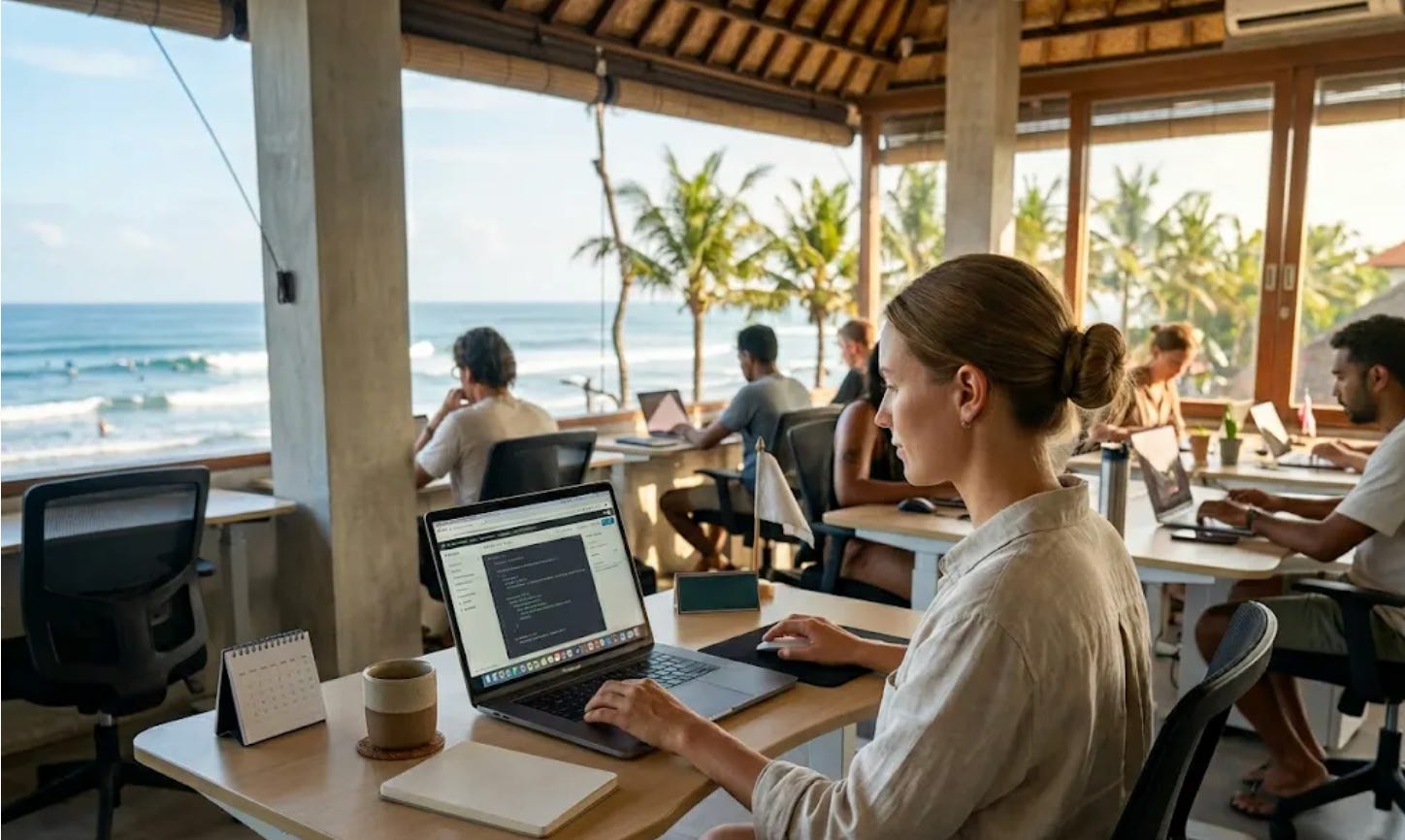
Something shifted in Bali around 2022. The pandemic had briefly emptied the island, and when people came back — slowly, then all at once — something was different. The tourist economy hadn’t just recovered; a new layer had arrived. Coworking spaces in Canggu were booked solid by 9 am. Cafés in Ubud had strict 90-minute wifi purchase policies. The island had, without anyone really planning it, become one of the most wired remote work destinations on the planet.
In 2026, that hasn’t changed — it’s just matured. The best coworking spaces in Bali now rival anything I’ve seen in Lisbon, Medellín, or Chiang Mai. Fast, redundant internet. Proper ergonomic setups. Communities that will make you question whether you ever want to work in an office again. But the landscape has become crowded and confusing, with free café spots, professional spaces, and everything in between all competing for your attention.
This is my current, honest guide to where to actually work in Bali — what’s genuinely good, what’s overrated, and what you need to know about staying legally if you’re planning more than a holiday.
Why Canggu is Still the Nomad Capital
I’ve heard people say Canggu is “over”. Too crowded, too expensive, too loud. And they’re not entirely wrong — rents climbed sharply over the past few years, and the beach road traffic on a weekend afternoon is genuinely not for the faint-hearted. But for coworking? Canggu remains unmatched.
The infrastructure has simply had more years to develop. There are more coworking options per square kilometre here than almost anywhere in Southeast Asia, and the community is self-sustaining in a way that takes years to build. The kind of person who ends up in Canggu is usually doing something remotely interesting — and that makes the accidental networking at the coffee machine genuinely valuable.
Practically speaking, Canggu works well as a base. You have fast, redundant internet connections at established spaces. Solid café culture for when you need a change of scene. And enough restaurants, gyms, and surf spots nearby to build an actual life around your work hours, rather than just a holiday version of one.
If you’re considering Bali as a long-term remote base and you’ve never been before, Canggu is where I’d suggest starting. Give it a month. See how it fits. Then, if you want something quieter, you know where Ubud is.
The Best Coworking Spaces in Canggu
Let’s get specific, because “best coworking spaces in Bali” lists have a way of recommending venues that closed three years ago or still list pre-pandemic prices. Here’s what’s actually operating and worth your money right now.
Dojo Bali is the one I recommend first. Located a minute from Batu Bolong beach, it operates 24/7 and runs six load-balanced fibre optic lines — which means your upload doesn’t die when fifty other people are on a Zoom call simultaneously. The ergonomic desk setup is solid, and the community events (masterminds, BBQs, skill-share sessions) are consistently worth attending. If you’re working in Bali for more than a week, this is where to be based.
Outpost Canggu is slightly more relaxed in vibe. Day passes start at $15, and monthly unlimited access runs around $195. The private booths are worth knowing about if you have a lot of calls — a 25-hour monthly pass at $54 includes three hours of booth time, which covers a reasonable number of meetings. Outpost also has a location in Ubud, which is useful if you’re splitting time between the two areas.
Tropical Nomad suits people who want something more social. Right in the heart of Canggu, open-air, and very easy to drop into for a day. Day passes start from around IDR 180,000 and a monthly pass from IDR 1 million — one of the more affordable options for this part of the island.
For pure budget, Tribal offers free coworking with wifi, a pool, and decent food. You’re expected to spend at the café, but that’s a very reasonable trade for what you get. ZIN Café is another well-known free spot that’s been a Canggu nomad staple for years.
Ubud for Focus Work: A Quieter Alternative
Ubud gets things done that Canggu cannot. The pace slows. The noise drops. The landscape — rice terraces, jungle, the Ayung River valley — has a way of clearing your head that I genuinely find nowhere else in Bali.
If you have deep work to do, or you’re working through something creatively difficult, Ubud is where you want to be. Not forever — the evenings are quiet, entertainment is limited, and the roads are steep. But for a focused week or two, it’s extraordinary.
Outpost Ubud in the Penestanan area is the go-to. It’s a coliving-and-coworking setup surrounded by rice terraces. The 25-hour monthly pass runs around $49 — slightly more than the Canggu equivalent but worth it for the setting. The wifi is reliable, the people interesting, and the surrounding area genuinely beautiful.
Beyond the dedicated coworking spaces, Ubud has an excellent café culture. Several spots along Jalan Raya Ubud and around the market area offer solid, stable connectivity. Most require a food or drink purchase, but they’re a comfortable and affordable option if you don’t need a full coworking setup on a given day.
The Digital Nomad Visa: Your Legal Right to Be Here
Let’s talk about the thing a lot of Bali content glosses over: the visa situation.
For years, most remote workers in Bali were technically working on tourist visas — a legal grey area that Indonesian authorities periodically decided to care about, and periodically didn’t. That’s changed. Indonesia now has a proper remote worker visa, and if you’re planning to stay beyond a month or two, you should be using it.
The E33G Remote Worker Visa (Indonesia’s official digital nomad visa) allows you to live and work remotely for up to one year, with the possibility of renewal. Key facts, verified as of early 2026:
Income requirement: Minimum $60,000 USD per year from sources outside Indonesia
Employment proof: Contract with a foreign company, or freelance agreements with non-Indonesian clients
Health insurance: Required for the full duration of your stay
Cost: Approximately IDR 7,000,000 (around $430 USD at current exchange rates)
Processing time: Typically one to two weeks after submitting a complete application online
Restriction: You cannot work for Indonesian companies or clients, or earn income locally
In my experience, consulting an immigration lawyer who specialises in Bali is worth every penny, even if your situation seems straightforward. The visa itself is clear, but individual circumstances — existing business relationships, dual income streams, planned company registrations — can add complexity that’s worth untangling before you arrive.
Practical Tips for Working Remotely in Bali
A few things I wish someone had told me earlier.
Test the internet before committing to a villa. Villa wifi in Bali varies enormously — from genuinely excellent to functionally unusable. If reliable connectivity is non-negotiable, base yourself near a coworking space and treat it as your professional home.
Time zones can work in your favour. Bali is UTC+8. If you’re working with European clients, your mornings are free and your work day runs through the afternoon and early evening — which happens to be peak Bali time for eating, socialising, and experiencing the island. Many people find this rhythm works beautifully.
The community matters as much as the desk. The best thing about coworking in Bali isn’t the fibre internet — it’s the people. Put yourself in places where conversations happen. Attend the Thursday night events at Dojo. Say yes to the random lunch invitation. The professional connections you make here tend to last.
Budget for it properly. A good coworking membership, a comfortable villa with reliable utilities, a scooter or car for getting around — it adds up faster than some blog posts suggest. Building a realistic monthly budget before you arrive will save you a lot of stress.
The infrastructure for working remotely in Bali in 2026 is genuinely excellent. The visa route is clearer than it’s ever been. The communities in Canggu and Ubud are as rich and interesting as you’ll find anywhere. And the lifestyle you can build around your work hours here — a morning surf, good coffee, an evening walk through rice fields — is genuinely hard to replicate elsewhere in the world.
If you’ve been sitting on the idea of doing this, the conditions have rarely been better. Come for a month, rent a desk, and figure the rest out on the ground. You’ll know within a fortnight whether it’s for you.
I’d love to know how you get on — drop me a message. 💙
FAQs
What is the best coworking space in Bali?
Dojo Bali in Canggu is consistently rated the top choice for serious remote workers. It offers 24/7 access, gigabit internet across six load-balanced fibre lines, and a strong, active community. Outpost is an excellent alternative with locations in both Canggu and Ubud.
How much does a coworking space in Bali cost per day?
Day passes typically range from IDR 150,000 to IDR 250,000 (approximately $9–$15 USD), depending on the space and location. Some cafés offer free wifi in exchange for food and drink purchases.
How much is a monthly coworking membership in Bali?
Monthly memberships range from around $150 to $250 USD at most established spaces. Puco Rooftop in Canggu starts from around $154/month. Unlimited access at Outpost is around $195/month, and a designated desk starts from $232.
Are there free coworking spaces in Bali?
Yes. Tribal in Canggu offers free coworking with wifi, pool access, and a café — you’re expected to spend money at the bar, but there’s no formal desk charge. ZIN Café is another long-standing free option. Many cafés across Canggu and Ubud offer reliable wifi for the cost of a coffee.
Is the internet reliable enough in Bali to work remotely?
At established coworking spaces, yes — absolutely. Dojo Bali runs six load-balanced fibre lines with gigabit speeds. The weak link tends to be villa wifi and home connections, which vary considerably. If reliable internet is non-negotiable, anchor yourself to a dedicated coworking space.
Do I need a special visa to work remotely in Bali?
Technically yes. Working remotely on a tourist visa puts you in a legal grey area. Indonesia’s E33G Remote Worker Visa is designed for this situation — valid for one year, requires proof of at least $60,000 USD/year income from non-Indonesian sources, and costs approximately IDR 7,000,000 to obtain.
Is Canggu or Ubud better for digital nomads?
Canggu wins on infrastructure, community, and coworking options. Ubud wins on quiet focus, natural beauty, and pace. I’d suggest starting in Canggu to settle in and find your rhythm, then spending a week or two in Ubud whenever you need to go deep on something.
Is it safe to leave a laptop at a coworking space in Bali?
At dedicated coworking spaces like Dojo and Outpost, yes — they have lockers, security, and professional setups. I wouldn’t leave expensive equipment unattended in a café. A good quality cable lock is a sensible investment if you’re regularly leaving gear on a desk.
What are the best areas in Bali for digital nomads beyond Canggu?
Seminyak is more polished and slightly quieter, with solid café coworking options. Uluwatu is popular with surfers who work remotely, though coworking infrastructure is thinner. Ubud is the clear choice for focused work. Sanur is sometimes overlooked — it’s calm, affordable, and has a small but genuine nomad community.
Can I open a bank account in Bali as a digital nomad?
It’s possible but requires patience. You’ll generally need a local SIM card, a KITAS/ITAS visa (such as the E33G), and sometimes an NPWP (Indonesian tax number). BCA and BRI are the most commonly used banks among expats. Many nomads manage perfectly well without a local account, using Wise or Revolut for day-to-day transactions — always verify current requirements locally before applying.
DISCLAIMER
A note from Annie
Destined for Bali shares my personal experiences, opinions, and independent research. Everything I write reflects what I’ve found to be true at the time of publishing — but Bali changes constantly, and what works for me may not work for you. Always do your own research and seek qualified professional advice before making decisions about travel, visas, property, business, health, or anything else that matters. Some links in my posts are affiliate links, meaning I may earn a small commission at no extra cost to you. Sponsored content is always clearly labelled. Read the full Terms and Privacy Policy.