
The Kecak Fire Dance at Uluwatu Temple 2026: What You Need to Know Before Booking
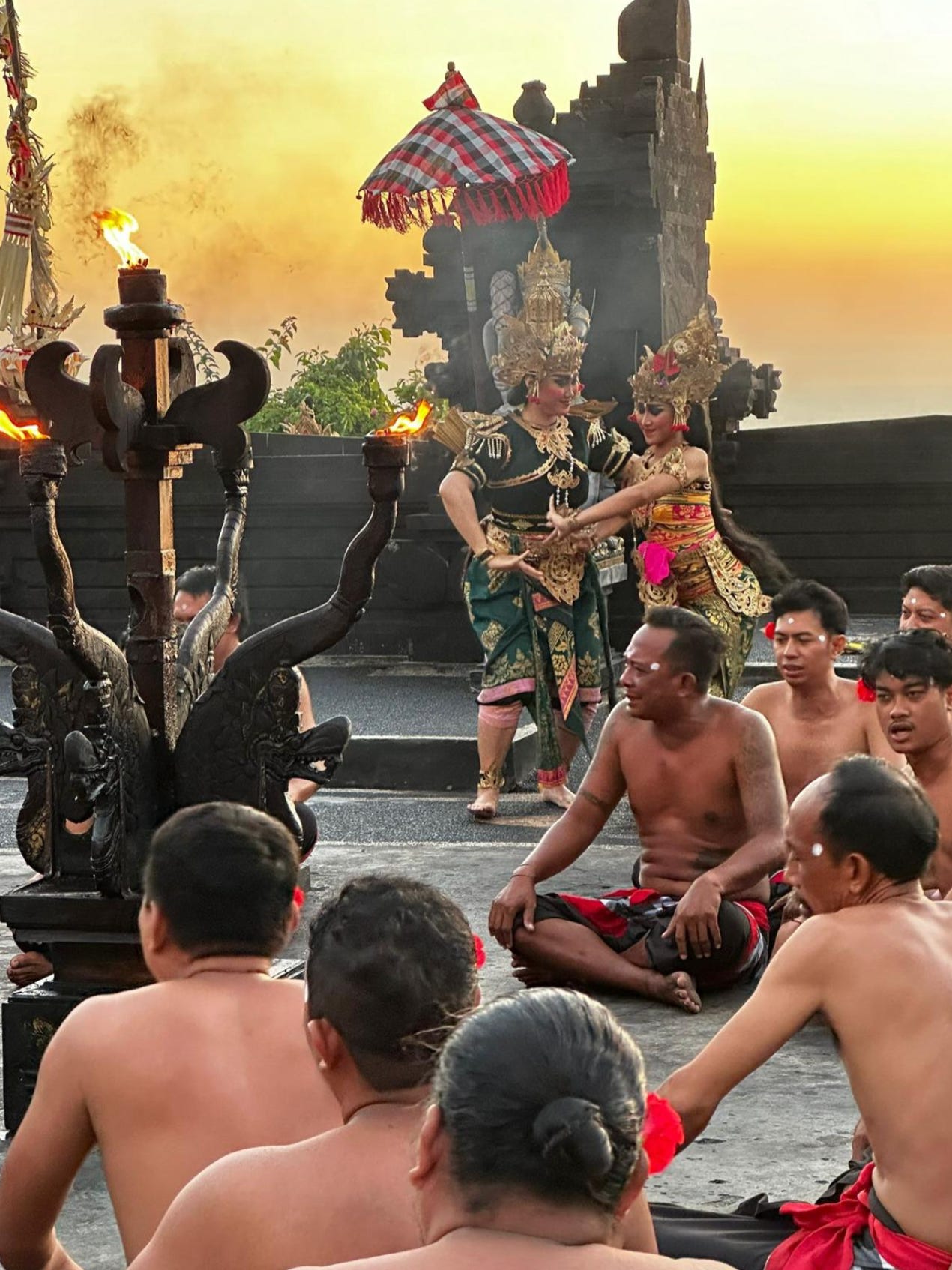
The Kecak Fire Dance is Bali’s most famous performance—50-70 men chanting rhythmically whilst dancers enact the Ramayana story with dramatic movement and acrobatic leaps over fire. It’s been called “monkey chant” because of the rhythmic vocalisation. It’s been called one of the most hypnotic performances in Southeast Asia. And yes, it genuinely lives up to the hype.
But here’s what matters: the performance happens at Uluwatu Temple, perched on cliffs overlooking the Indian Ocean at sunset. The combination of ancient temple, dramatic story, firelight, and ocean backdrop is genuinely powerful.
This guide covers what the Kecak actually is, how to book responsibly, and what to actually expect.
What Is the Kecak Fire Dance?
Kecak isn’t traditional in the classical Balinese sense—it’s a 1960s creation that blends various Balinese artistic traditions into a performance-for-audiences format. But that doesn’t make it less impressive or less connected to Balinese culture. The chanting, the story, the athleticism, and the fire are all rooted in genuine Balinese practices.
The narrative usually follows the Ramayana—the epic Hindu story—with characters like Rama, Sita, and Hanuman enacting scenes of love, abduction, and heroic rescue. The 90-minute performance builds in intensity, climaxing with the fire dance where performers leap over flaming logs.
Where & When
Location: Uluwatu Temple at cliff’s edge in south Bali (Uluwatu area, about 40 minutes from Ubud, 20 minutes from Seminyak).
Timing: Performances typically 6-7 PM (sunset time varies seasonally). Duration: 90 minutes.
Frequency: Daily performances, though occasionally cancelled for religious ceremonies.
Arriving early matters: Temple visits usually open 30 minutes before the performance. Arriving early gives you time to see the temple grounds, the ocean views, and settle into the space.
How to Book
Directly with Uluwatu Temple: IDR 150,000-200,000 per ticket (book in person at the temple or call ahead).
Through hotels: Usually IDR 250,000-400,000 (includes transport, sometimes dinner).
Online tour operators: IDR 300,000-500,000 with transport included.
Pro tip: Book directly with the temple to avoid middleman markups and ensure money goes to the performers.
What to Expect
Seating: Bleachers arranged in rows facing the performance area. Most have decent views, but corner seats are better for visibility of all dancers.
Temple atmosphere: You’re in an active temple. Other worshippers may be praying. Show respect. Cover shoulders and knees.
The performance: Opens with temple blessing, transitions into the Ramayana story with choreographed fighting, acrobatic leaps, and increasingly dramatic scenes. The fire dance finale is genuinely impressive—performers leap over burning logs with acrobatic precision.
Duration & pace: 90 minutes, fast-paced, visually intense, with moments of comedic relief and moments of genuine drama.
Crowds: Popular show means moderate crowds. It’s not overwhelming but not intimate either.
Photography & Phone Policy
Phones: Allowed but be respectful. Don’t use flash (distracting for performers and other guests).
Photography: Allowed throughout. Many people photograph the sunset first, then settle in for the performance.
Video: Generally allowed for personal use. Some temples restrict commercial filming.
Dress Code & Practicalities
What to wear: Respectful clothing—covered shoulders and knees. Sarongs are worn by many. Comfortable shoes for walking the temple grounds.
Weather: Ocean breezes can be cool. It’s sunset, so temperature drops. Bring a light layer.
Duration: Budget 2-3 hours total (arrival, temple exploration, performance).
Food: Limited options at the temple. Eat before or after. Water available.
Honest Assessment: Is It Worth It?
Yes, if: You appreciate live performance, enjoy dramatic storytelling, want to experience something genuinely Balinese, and appreciate the skill of the performers.
Maybe not, if: You hate crowds, prefer quiet experiences, or don’t connect with narrative-based performances.
Verdict: It’s one of the most impressive live performances in Bali. The sunset backdrop, the ocean views, the temple setting, and the genuinely skillful performance combine for something genuinely powerful. Go at least once.
Common Mistakes
Booking through pushy touts: They sell overpriced tickets. Book directly.
Not arriving early: You miss the temple and sunset.
Not respecting the temple: This is a sacred space, not a concert venue.
Expecting absolute solitude: It’s popular. Manage expectations.
Conclusion
The Kecak Fire Dance is one of Bali’s most genuine cultural experiences worth a specific trip. Book directly with the temple, arrive early to see the temple and sunset, watch the 90-minute performance, and leave impressed. It’s worth the effort and cost.
❓ FAQs
Q: Is it touristy?
Yes, it’s a performance for audiences. That doesn’t make it less impressive or less connected to Balinese culture.
Q: How much does it cost?
IDR 150,000-200,000 directly. IDR 300,000-500,000 with tour operators/hotels.
Q: Is the fire dance dangerous?
The performers are skilled. They know how to leap safely. You’re safely distant.
Q: Can I photograph?
Yes, respectfully. No flash. Be mindful of others.
Q: How long is it?
90 minutes performance + 30 minutes arrival/settling.
Q: Is it worth it?
Yes. One of Bali’s best live performances.
Disclaimer
Cultural & Entertainment Events: This article describes my own experience attending the Kecak Fire Dance at Uluwatu Temple. Fire performances carry inherent risks. Always follow venue safety instructions. Consult your doctor if you have respiratory concerns before attending fire-based performances. This is not professional safety or medical advice.
Destined for Bali shares my personal experiences and independent research. Everything I write reflects what I’ve found to be true at the time of publishing—but performance schedules, prices, temple protocols, and safety procedures may change. Always confirm current information directly with Uluwatu Temple or booking operators before attending.
Some links in my posts are affiliate links, meaning I may earn a small commission at no extra cost to you. Sponsored content is always clearly labelled. Read the full Terms and Privacy Policy.